What Is Greenwashing? Meaning, Examples, and How to Avoid It
Read Now



August 17, 2026

Your sustainability copy may need a rewrite before September 2026.
Under the EU’s new greenwashing rules, consumer-facing environmental claims will face stricter scrutiny. The directive applies not only to companies based in the EU, but also to businesses selling products or services to EU consumers. For brand and marketing teams, this is not simply a compliance update that sits with legal. It affects the words you publish on websites, packaging, ads, product pages, email campaigns, social posts, and impact reports.
Claims like “eco-friendly,” “green,” “climate neutral,” or “sustainable” can create risk if they are vague, broad, or not backed by clear evidence. The goal is not to stop talking about sustainability. The goal is to make every claim more specific, scoped, and supportable.
veritree helps brands support verified restoration projects and communicate impact with project data, reporting tools, and clearer claim language, so sustainability marketing can move from broad statements to proof-backed communication.
Download the anti-greenwashing guide.
If your team writes or approves consumer-facing sustainability claims, the EU greenwashing directive changes your risk profile.
The issue is not only whether your brand is doing real sustainability work. The issue is whether the words you publish are specific, evidence-backed, and clear about what the claim covers.
This matters for marketing, brand, ecommerce, content, communications, and product teams because the claim often appears in the places they control: website copy, product pages, packaging, paid ads, social posts, email campaigns, campaign landing pages, and impact reports.
A real sustainability initiative can still create a risky claim if the copy overstates what the program proves. A product page, ad, or campaign headline may be the place where the risk appears, even if the data lives with the sustainability team.
For example, a brand may support verified tree planting through a specific campaign. But if the campaign copy says the entire brand is “sustainable” or that every purchase is “carbon neutral,” the public claim may go further than the evidence supports.
That is why sustainable marketing needs to shift from broad positioning to claim defensibility.
Before September 2026, marketing teams should review public-facing copy and ask:

Sustainable marketing is still possible. It just needs to be more specific.
Directive (EU) 2024/825 updates EU consumer protection rules to address misleading environmental claims, sustainability labels, and future environmental performance claims. For marketers, the practical takeaway is simple: vague green language is both a reputational and regulatory risk.
The Directive includes examples of generic environmental claims such as “environmentally friendly,” “eco-friendly,” “green,” “nature’s friend,” and “ecological.” These types of claims may create risk when they are broad, undefined, or not supported by recognized measurable environmental performance.
For marketing teams, that means sustainability copy needs to be reviewed before it goes live. Claims should be clear, scoped, and tied to evidence.
The Directive matters because consumers see the claim, not the internal data file behind it.
That means websites, product pages, packaging, paid ads, social posts, ecommerce listings, emails, event materials, and customer-facing campaign pages all need careful review.
If your brand is communicating a restoration campaign, the claim should explain what the campaign supports. It should not imply more than the project data can prove.
A stronger approach is to link marketing claims to clear reporting, such as an Impact Hub or customer-facing impact experience, where consumers can understand the project, progress, and scope.
Words like “green,” “eco-friendly,” “sustainable,” and “planet-friendly” can feel simple, but they are often too broad.
The problem is that consumers may interpret those claims as applying to the whole product, purchase, brand, supply chain, or company. If your evidence only supports one restoration campaign, the claim needs to say that.
Instead of saying a product is “eco-friendly,” marketers should describe the actual action being supported.

Claims based on offsetting or neutralization need special care.
Avoid implying that a product, order, purchase, or company is climate neutral because of tree planting or restoration unless the claim can be fully substantiated under applicable rules.
A safer claim focuses on the supported action:
“This campaign supports verified restoration activity in [project location], with project reporting that includes planting activity, restoration updates, and [X amount] of estimated carbon to be sequestered over [X years], where applicable.”
The safest sustainable marketing examples are not about saying less. They are about saying exactly what your brand can support with evidence.
Use the examples below as a practical starting point for reviewing campaign copy, product pages, email language, social captions, and packaging claims.
Riskier claim:
“Eco-friendly products for a better planet.”
Stronger claim:
“This campaign supports verified restoration activity in [project location], with project updates available through [reporting link or dashboard].”
Why this is stronger:
It replaces a broad environmental claim with a specific action, location, and evidence path. It also avoids implying that the product itself is fully eco-friendly unless that product claim can be independently supported.
If your campaign is tied to tree planting, link the claim to a specific tree planting project or restoration initiative.
Riskier claim:
“We’re a green brand.”
Stronger claim:
“Our 2026 restoration campaign supports verified tree planting in [region]. The campaign applies to [specific product line / purchase action / event], not our full business footprint.”
Why this is stronger:
It avoids making a company-wide claim based on one specific campaign.
If your brand is supporting restoration as part of a broader business initiative, keep the scope clear and connect the claim to climate action for businesses.
Riskier claim:
“Make a sustainable purchase today.”
Stronger claim:
“Every purchase from this campaign supports verified restoration activity in [location], tracked through [reporting tool].”
Why this is stronger:
It avoids implying the product or purchase itself is sustainable unless that broader product claim is fully supported.
The better claim explains what the purchase supports and where the consumer can find proof.
Riskier claim:
“This order is carbon neutral.”
Stronger claim:
“This order supports verified nature-based activity, including project-level estimates for carbon to be sequestered where applicable.”
Why this is stronger:
It avoids implying that the purchase has been fully neutralized.
This is especially important for brands working with nature-based solutions, where carbon methodology continues to evolve.
Riskier claim:
“Shop climate positive.”
Stronger claim:
“Your purchase helps fund verified restoration in [project location]. Project reporting includes planting activity, restoration updates, and relevant impact indicators.”
Why this is stronger:
It moves away from broad climate positioning and toward project-specific evidence.
If the campaign supports more than tree planting, such as nature-based climate action, explain the restoration type and how progress is tracked.
Riskier claim:
“Planet-friendly packaging.”
Stronger claim:
“Our packaging uses [specific material / recycled content / lower-impact design], and this campaign also supports verified restoration in [location].”
Why this is stronger:
It separates the packaging claim from the restoration claim.
This matters because packaging claims and restoration claims are different. If the packaging is recycled, compostable, reusable, or made with lower-impact materials, state that specifically. If the campaign also funds restoration, explain that separately.
Do not let one claim blur into another.
Riskier claim:
“We restore nature with every order.”
Stronger claim:
“For every order during this campaign, [brand] funds verified restoration activity through veritree. Project progress is tracked through [Impact Hub / reporting link].”
Why this is stronger:
It clarifies the action, timing, and evidence path.
It also avoids making the claim sound broader than the program itself. The phrase “during this campaign” matters because it defines when the claim applies.
Riskier claim:
“100% sustainable.”
Stronger claim:
“This product line includes [specific sustainability attribute], and our restoration campaign supports [specific project type] in [location].”
Why this is stronger:
Absolute claims are difficult to defend. Specific claims are easier to substantiate.
Instead of trying to summarize a whole product, campaign, or company with one broad phrase, break the claim into proof points that can be verified.

Marketing teams should audit consumer-facing copy for broad environmental language before September 2026.
The goal is not to delete every sustainability reference. The goal is to replace vague claims with specific, substantiated language that explains what the brand is actually doing.
High-risk language to review includes:
Some of these phrases may be used safely only in specific contexts with strong substantiation. The problem is not always the word itself. The problem is when the word is broad, undefined, or not clearly tied to evidence.
A safer approach is to use specific language about the action:
For brands working with veritree, public-facing claims can often be strengthened by pointing to verified restoration activity, project data, and marketable impact content.
Marketing teams often see sustainability copy as brand positioning. Under stricter greenwashing rules, it becomes a claims risk.
The published claim is what consumers see, what regulators assess, and what legal or compliance teams may need to defend. That makes this a marketing problem, not only a legal or ESG problem.
Several major brands have already faced penalties for environmental claims that regulators found misleading or unsupported. In Canada, Keurig paid a $3 million penalty in 2022 after the Competition Bureau found that its recyclable K-Cup claims did not reflect the limited availability of municipal recycling programs across the country. In 2022, Walmart and Kohl’s paid civil penalties after the FTC said they marketed rayon textile products as “bamboo” and made misleading environmental benefit claims. More recently, Shein was fined €1 million in 2025 by Italy’s competition authority over sustainability messaging that was described as vague, generic, or potentially misleading.
Greenwashing enforcement is also happening in ESG and investment-related claims. In 2022, BNY Mellon paid a $1.5 million SEC penalty over ESG review statements that did not consistently match the firm’s actual process, while Goldman Sachs Asset Management paid $4 million over failures related to ESG investment policies and procedures. In Australia, Mercer and Vanguard were both penalized in 2024 for misleading sustainability or ESG claims tied to investment products.
The common thread across these cases is that the public claim did not fully match the evidence, scope, or process behind it. For brands, this reinforces the need for specific language, defensible documentation, and impact reporting that can support every sustainability claim before it goes live.
A sustainability claim may be written in a campaign brief, landing page headline, product description, or social caption. But if the claim is challenged, the business needs to show the evidence behind it.
That means marketing teams need a repeatable workflow:
Campaign speed cannot replace claim support.
A defensible sustainable marketing claim is specific, scoped, evidence-backed, and easy to verify.
It should explain what action was taken, what the claim applies to, and where the evidence lives.
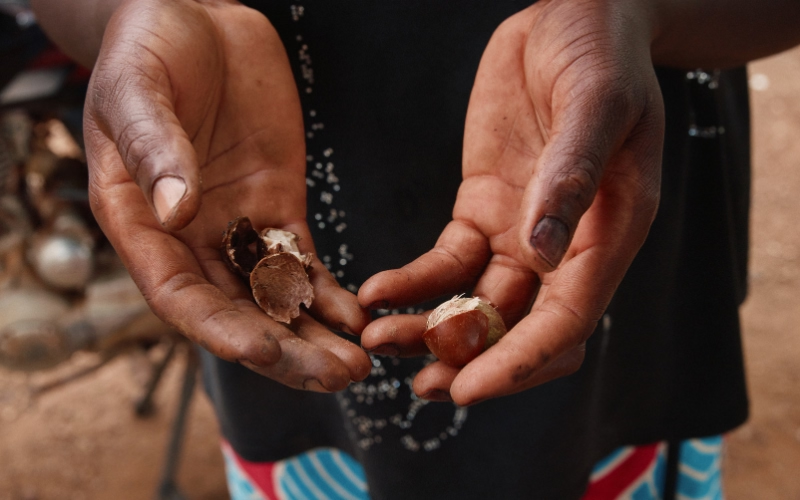
Name the actual action. Instead of saying “we’re helping the planet,” say whether the campaign supports verified tree planting, forest restoration, mangrove restoration, kelp seaforestation, urban restoration, or another nature-based solution. Specific action is easier to understand and easier to defend.
Explain whether the claim applies to a campaign, product line, event, transaction, customer action, or company-wide program. Scope is one of the most important parts of sustainable marketing. It prevents the audience from assuming the claim applies more broadly than it does.
Link the claim to project data, reporting tools, dashboards, methodology notes, or documentation. This is where impact reporting becomes essential. It gives the marketing team a clearer way to connect copy to proof.
Do not imply that a product, purchase, or order is carbon neutral unless that claim is fully substantiated under applicable rules.
Document who approved the claim, what evidence was reviewed, and when the claim should be updated. A defensible claim is not only about the words on the page. It is also about the internal process behind those words.
Different channels create different claim risks. Short-form copy can be especially risky because there is less room for context.
Website and landing page claims should explain the project, campaign scope, reporting link, and what the initiative covers.
A stronger landing page claim might say:
“This campaign supports verified restoration activity in [project location]. Project progress is tracked through [Impact Hub / reporting link].”
This is clearer than saying:
“We’re making every purchase sustainable.”
Product pages need to be especially careful because consumers may assume sustainability claims apply directly to the product.
If the claim is about a restoration campaign, say that. If the claim is about the product’s materials, packaging, manufacturing, or lifecycle, those details need separate evidence.
Do not use a restoration campaign to imply the full product is sustainable.
Packaging claims are often short, which makes them easy to overstate.
Use QR codes or short URLs to link to project data, reporting pages, or an Impact Hub. This gives consumers a way to verify the claim without requiring too much copy on the package.
A stronger packaging claim might say:
“This campaign supports verified restoration. Scan to view project progress.”
Email campaigns can use more context than packaging or paid ads, so use that space.
Explain what the campaign supports, where the project is located, and where readers can find updates.
Avoid broad subject lines like “Shop sustainably today” unless the claim is fully supported.
Social captions should be concise but specific.
Instead of “We’re going green,” use:
“This campaign supports verified tree planting in [location]. Follow the project through [reporting link].”
Social content should avoid claims that are too broad to explain in the post.
Paid ads are high-risk because copy is short and highly visible.
If there is no room for proper context, choose narrower language and link to a landing page with details.
Avoid vague claims like “climate positive products” or “eco-friendly shopping” if the click-through page does not clearly substantiate the claim.
Impact reports are where brands can use the most complete claim language.
This is where teams can include project scope, location, restoration type, reporting methodology, limitations, and updated progress.
Impact reports can also help marketing teams understand which claims are already approved and supportable.
Verified restoration gives brands something specific to communicate.
Instead of saying a brand is “green,” marketers can say what project was supported, where it is located, what data is available, and how progress is tracked.
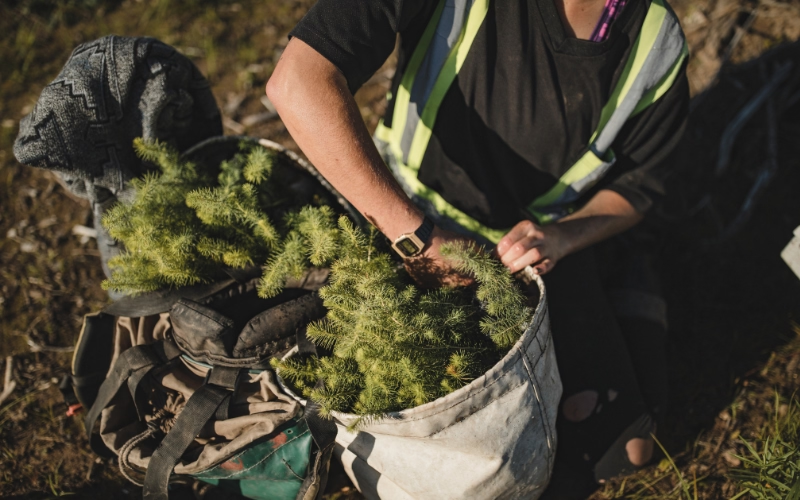
Through veritree, brands can support verified tree planting, forest restoration, mangrove restoration, kelp seaforestation, urban restoration, and other restoration projects. These projects can be connected to customer campaigns, product launches, events, employee milestones, loyalty actions, or broader sustainability programs.
veritree’s team conducts due diligence on planting and restoration projects before offering them to brands. Before a brand becomes a partner, veritree’s team helps tailor project selection based on the brand’s goals, audience, campaign needs, and sustainability priorities.
The platform supports project visibility, monitoring, reporting, dashboards, and stakeholder communication through tools like the Partner Portal and Impact Hub.
This gives marketing teams better raw material for claims:
With that information, sustainable marketing becomes more specific, more useful, and easier to defend.
Before publishing a sustainability claim, ask:
This checklist should be part of the campaign workflow, not a final step after the copy is already approved.
The easiest claim to defend is the one that was written with evidence in mind from the start.
Sustainable marketing campaigns can create risk when the language is broader than the evidence.
To reduce that risk, avoid:
A safer sustainable marketing campaign explains the actual action, defines the scope, and links to the evidence.
veritree helps brands build sustainability campaigns that are grounded in verified restoration, transparent reporting, and clearer claim language.
veritree’s team reviews planting and restoration projects before offering them to brands.
This gives brands access to restoration opportunities that have gone through project due diligence before they are presented as options.
veritree’s team helps brands choose available projects that align with their goals, audience, campaign needs, and sustainability priorities.
This helps brands select projects that fit the story they want to tell and the impact they want to support.
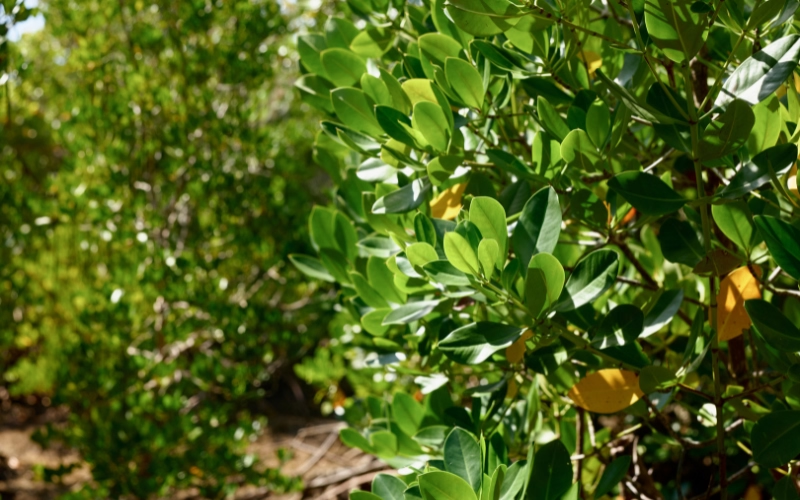
Brands can support verified tree planting, forest restoration, mangrove restoration, kelp seaforestation, urban restoration, and other nature-based solutions through veritree’s restoration projects.
This gives marketing teams specific project details to communicate instead of relying on vague green language.
Dashboards and reporting tools help brands connect public claims to project data and updates.
This makes it easier to explain what the campaign supports and how progress is tracked.
Digital assets, project stories, and field evidence help customers understand what the campaign supports.
This can make sustainability campaigns more engaging while keeping claims tied to the available evidence.
veritree helps brands keep claims scoped, specific, and connected to available project data.
That means helping brands move from broad statements like “we are sustainable” to more defensible language about verified restoration activity, project location, reporting tools, and impact indicators.
Sustainable marketing is changing. The strongest claims are no longer the broadest claims. They are the clearest, most specific, and best supported.
veritree helps brands support verified restoration projects and communicate impact with project data, dashboards, reporting tools, and more responsible claim language. With project due diligence completed by the veritree team and ongoing support from the customer success team, brands can build sustainability campaigns that are easier to understand, easier to verify, and easier to defend.
Build sustainability copy that can stand up to questions.
Download the anti-greenwashing guide.
Reach out today to build a safer sustainability program.
Brands should review broad claims like “eco-friendly,” “green,” “sustainable,” “carbon neutral,” “climate neutral,” “climate positive,” “planet-friendly,” and “good for the planet.” These claims may create risk if they are vague, unsupported, or not clearly scoped.
The EU greenwashing directive matters for marketing teams because they write and publish consumer-facing claims. Website copy, packaging, ads, product pages, email campaigns, and social posts may all need to be reviewed for clearer scope and substantiation before the rules apply from September 27, 2026.
A safer sustainable marketing claim is specific, scoped, and backed by evidence. Instead of saying “eco-friendly,” a brand might say, “This campaign supports verified restoration activity in [location], with project progress tracked through [reporting link].”
The Directive targets generic environmental claims when they are not properly substantiated. Terms like “eco-friendly,” “green,” and “environmentally friendly” should be reviewed carefully and replaced with more specific language when possible.
Brands can reduce greenwashing risk by using specific claims, defining claim scope, linking claims to evidence, avoiding broad carbon claims, using careful carbon language, and reviewing copy before publication.
veritree supports safer sustainability marketing through verified restoration projects, project due diligence, tailored project selection, impact dashboards, reporting tools, customer-facing content, and support for more specific, scoped claim language.
PREV BLOG