Growing Food Security in West Bengal
Read Now



July 2, 2026

Roughly 40% of rural India’s population cannot afford two basic vegetarian meals a day.1 In states like West Bengal, where most households depend on smallholder farming, the gap between what the land can give and what families actually need is felt in every season.
Agroforestry is the practice of integrating trees with food crops on the same plot of land. It is one of the most well-documented responses to the challenge of food insecurity. Published research consistently shows that agroforestry systems reduce the vulnerability of rural communities by providing both cash and subsistence returns while strengthening food security.2 When done right, it doesn't just restore land. It changes the economics of a household.
That's the vision behind veritree's India agroforestry project in West Bengal.
The project works directly with smallholder farming households to plant native and domesticated fruit-bearing tree species within homestead gardens: land farmers already own, already tend, and already protect.
Before a single sapling is planted, the work begins with people. Field teams conduct social surveys with participating households using the veritree App, and community meetings are held to identify interested families and provide training in scientific, low-cost agroforestry practices. Local botanists and GIS experts support the process from the start.
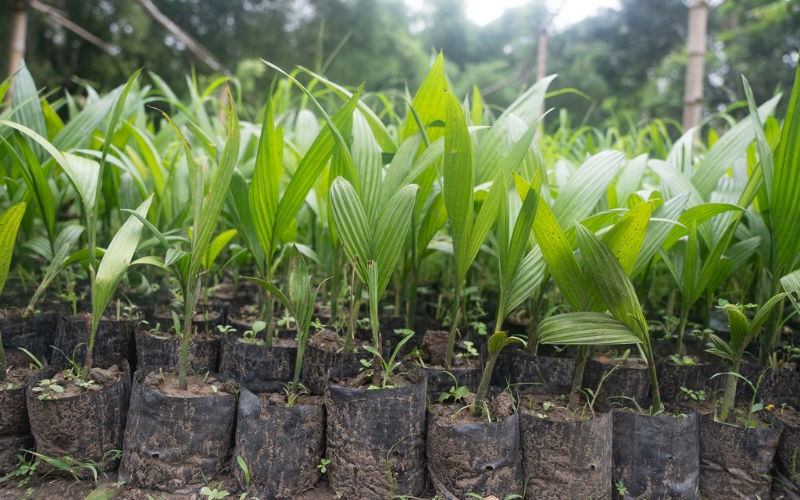
Between January and March 2026, the project completed two planting phases across East Medinipur. An average of 49 trees were planted per household. All saplings were registered and verified.
The species planted include jackfruit, pomegranate, lemon, mango, guava, wood-apple, stone-apple, elephant apple, Indian olive, Indian black berry, and sugar palm. Each species was selected for its native character and suitability to local soil conditions. Many households' gardens already contained established trees, meaning soil conditions were moderate to good at most sites.
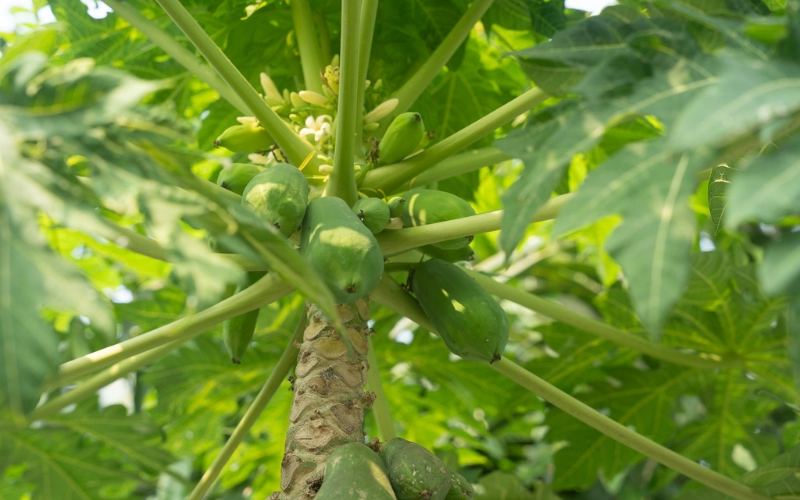
Because trees are planted within household gardens rather than open fields, they benefit from natural boundary fencing and the daily attention of family members. Early root and shoot development across the site indicates the saplings are establishing well.
Kajol is a farmer who received 39 saplings through the initiative, now planted and growing in her homestead garden. She and her family are actively caring for the trees and tracking their progress.
For Kajol, the motivation is practical and deeply personal. As she explains:
"I believe my family will not have to buy fruits from the market, as we will get them from our garden itself. Family members, especially the children, will be able to consume good-quality and naturally grown produce, which will save us a sufficient amount of money that we can use for the children's education."
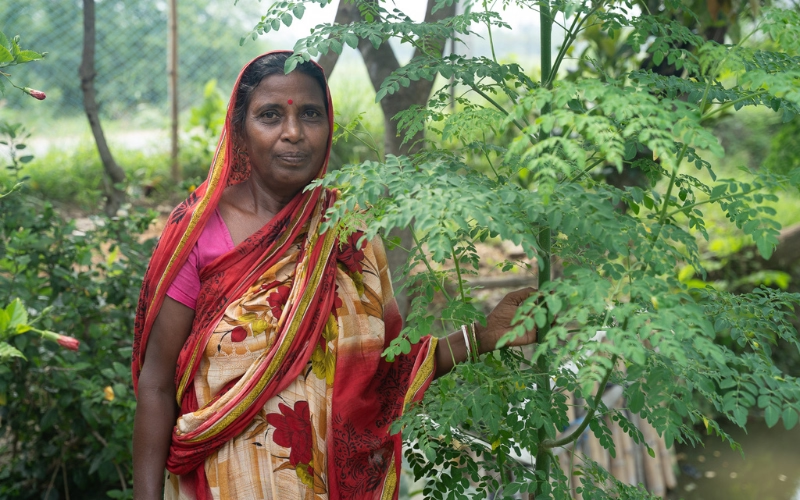
She also sees the trees as something larger than her household. She shared that, beyond supporting her family, the growing canopy will help maintain ecological balance and provide habitat for birds and other species she says are becoming increasingly rare in the area.
Mihir is a smallholding farmer who planted 71 saplings in the available space within his homestead garden. For him, the project transformed unused land into something purposeful.
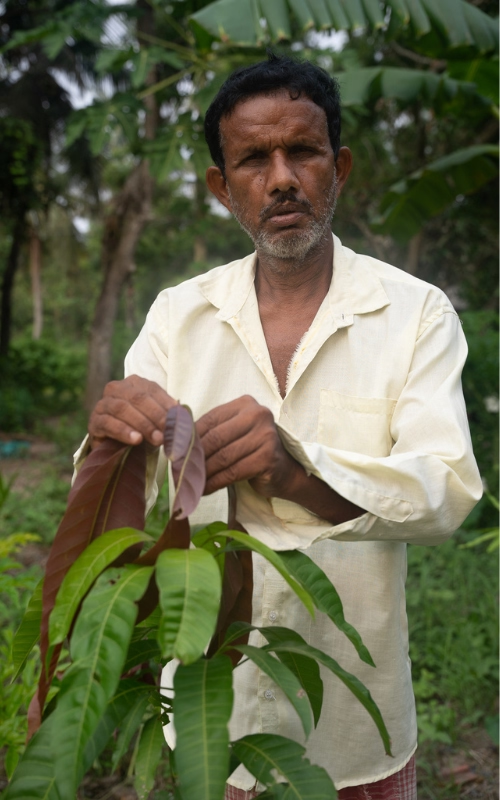
"The empty space in our garden is now becoming something useful for our family," he says. "In the coming years, these trees will provide fruits, shade, and a greener environment around our home. I feel happy knowing that what we plant today will benefit both our children and our land in the future."
The evidence base for agroforestry in India is substantial: it contributes to rural socio-economic development, food security, and poverty alleviation. As climate pressures grow, it offers a viable path toward sustainable livelihoods and stronger environmental resilience, particularly for marginalized farming communities.3
Agroforestry systems also deliver measurable benefits across multiple dimensions: enhanced dietary diversity, significant carbon sequestration, soil health improvements with up to 50–70% less erosion compared to monoculture, income generation increases of up to 40%, and a localized cooling effect of 2–5°C.4
veritree's India project puts all of this into practice at household scale: traceable, verified, and growing.
If your company is looking to invest in restoration that delivers measurable environmental and community outcomes, we'd love to talk.
Sources:
PREV BLOG