Climate Change and Corporate Social Responsibility
Read Now



October 16, 2026

Climate change and corporate social responsibility are deeply connected.
Consumers, shareholders, regulators, governments, employees, and the general public increasingly expect businesses to do more than acknowledge environmental challenges. They expect companies to take meaningful action, support measurable solutions, and communicate progress with transparency.
For brands, corporate social responsibility can no longer sit separate from climate action. Companies that fail to connect CSR with credible environmental action may face reputational challenges, stakeholder pressure, regulatory scrutiny, and even revenue risk as customers and partners become more selective about the brands they support.
CSR programs need to include clear steps that support people, nature, and long-term environmental resilience. That can include verified restoration, nature-based solutions, employee and customer engagement, and transparent impact reporting.
Take Climate Action
Explore Verified Projects
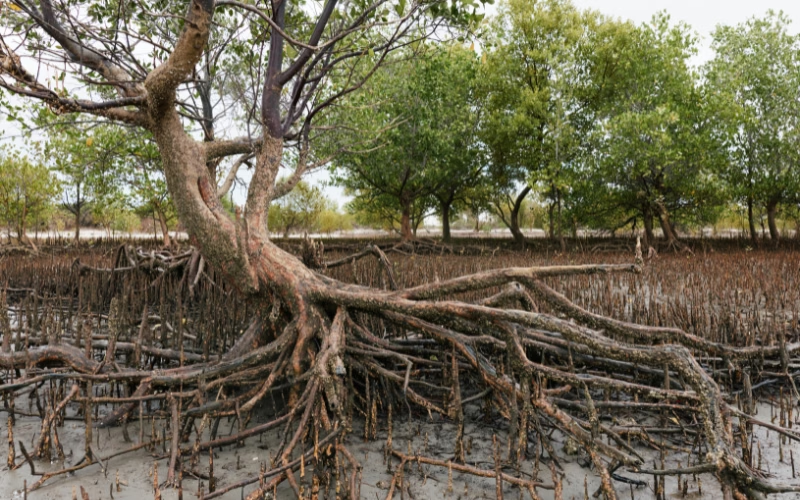
Corporate social responsibility used to focus heavily on philanthropy, community support, ethical business practices, and employee programs. Those still matter, but climate change has expanded what CSR needs to include.
Today, businesses are expected to understand their environmental impact and take action that supports a more resilient future. That can include operational improvements, emissions reduction, verified restoration, biodiversity support, community resilience, employee engagement, customer participation, responsible communication, and transparent reporting.
Climate change has made CSR more visible and more urgent. It affects ecosystems, communities, supply chains, food systems, water systems, and future generations. Because of this, CSR can no longer be treated as a separate “goodwill” initiative. It needs to be part of how businesses act on their broader responsibility to people and the planet. For many companies, this means moving from statements to measurable action.
A climate-focused CSR program can help businesses:
Verified restoration can make CSR more tangible. Instead of saying a company cares about climate change, businesses can support specific projects, track progress, and share impact through transparent data.
Corporate social responsibility, or CSR, is how a business takes responsibility for its impact on society, communities, and the environment. In the context of climate change, CSR includes the actions a company takes to reduce environmental harm, support climate solutions, invest in restoration, engage stakeholders, and communicate progress responsibly. Climate-focused CSR does not replace operational sustainability work. Businesses should still look at emissions, supply chains, materials, energy use, waste, and internal practices. But CSR can help companies go further by supporting initiatives that create environmental and social value beyond their direct operations.
Environmental responsibility focuses on how a business affects the planet and how it can support healthier natural systems. This can include reducing harm, supporting verified climate solutions, restoring ecosystems, protecting biodiversity, improving resource use, and investing in long-term environmental resilience. For companies working with veritree, environmental CSR can include verified tree planting, reforestation, mangrove restoration, kelp seaforestation, post-wildfire restoration, urban restoration, and other nature-based projects. These initiatives can support biodiversity, land health, water systems, ecosystem resilience, community impact, and carbon sequestration where applicable.
Social responsibility focuses on people. This can include employees, customers, local communities, supply chain partners, and the people connected to sustainability initiatives. In restoration, social impact may include local employment, community engagement, livelihood support, education, food access, and stronger community resilience, depending on the project. Climate-focused CSR should recognize that people and nature are connected. When ecosystems are degraded, communities often feel the impact. When restoration is done responsibly, it can help support both environmental recovery and social value.
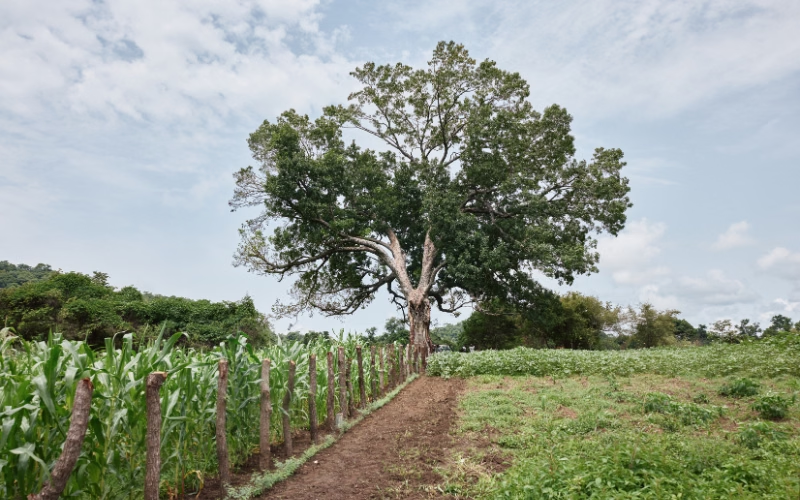
Responsible communication is an important part of climate-focused CSR. As sustainability claims face more scrutiny, businesses need to communicate climate action carefully. Broad claims like “we are sustainable,” “we are saving the planet,” or “we are climate positive” can create risk if they are not clearly supported. A strong CSR claim should explain what the company is supporting, where the work is happening, how progress is tracked, and what the claim does not mean. Transparent reporting, careful claim language, and clear evidence help businesses communicate CSR progress with more confidence.
CSR commitments are stronger when they are connected to real projects with actual proof and measurable outcomes. A company can commit to climate action, but stakeholders increasingly want to know what that action looks like. They want to see what was funded, where the work happened, who implemented it, what data was collected, and how progress is being tracked. Verified restoration gives businesses a practical way to support climate action while creating measurable environmental and social outcomes. veritree’s team performs due diligence on planting and restoration projects before offering them to brands. Before a company becomes a partner, veritree helps tailor project selection based on the brand’s goals, audience, sustainability priorities, and campaign needs. This helps businesses move from general CSR language to specific climate action.
With veritree, companies can support nature-based solutions that are connected to:
The result is a CSR program that is easier to see, measure, and share.
Climate-focused CSR can take many forms. The right program depends on a company’s goals, audience, industry, sustainability priorities, and reporting needs.
Here are a few examples of how businesses can connect corporate social responsibility and climate action.
Businesses can support verified tree planting as part of CSR campaigns, customer initiatives, employee milestones, or annual sustainability goals. With veritree, tree planting is connected to monitoring, impact tracking, and transparent reporting. This helps companies understand what their investment is supporting over time. Tree planting can be especially effective when it is tied to a clear program structure. For example, a company may plant trees for customer purchases, employee milestones, product launches, community campaigns, or corporate anniversaries. The key is to communicate the program clearly. A strong claim should explain where the trees are being planted, how progress is tracked, and what the program supports. Learn more about veritree’s verified restoration projects.
Forest restoration can help businesses support ecosystem recovery, biodiversity, land health, community outcomes, and carbon sequestration. A forest restoration program may support degraded landscapes, post-logging recovery, habitat restoration, or community-connected reforestation. These projects can help businesses move beyond a simple tree count and support broader environmental outcomes. Forest restoration can also give CSR teams a stronger story to share. Instead of only saying a company planted trees, the business can explain why a specific landscape needs restoration, how the project is being monitored, and what outcomes are being tracked.
Mangrove restoration can support coastal ecosystems, biodiversity, community resilience, and nature-based climate action. Mangroves are important because they exist where land and water meet. They can provide habitat for coastal species, help protect shorelines, support local livelihoods, and contribute to broader ecosystem resilience. For CSR programs, mangrove restoration can create a strong connection between climate action, biodiversity, and community impact. These projects can also be valuable for brands that want to support coastal resilience and tell a more place-based restoration story.
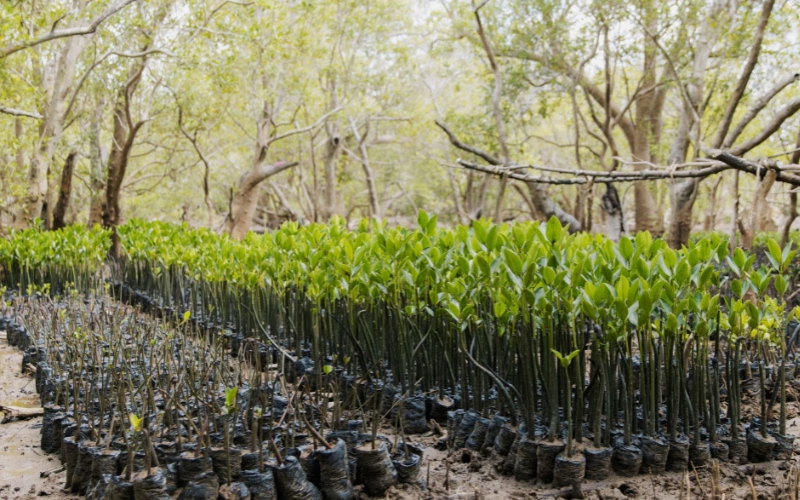
Kelp seaforestation and marine restoration can help businesses expand CSR beyond land-based projects and support ocean health. Marine restoration can help companies connect climate-focused CSR to aquatic ecosystems, biodiversity, and coastal communities. For brands with a connection to oceans, water, recreation, beauty brands, food systems, travel, or coastal regions, this type of CSR program can be especially relevant. Kelp and marine restoration should be communicated carefully. The strongest angle is often habitat, biodiversity, ocean health, and field-level storytelling.
Urban restoration can help businesses support greener cities, community well-being, biodiversity, and local climate resilience. For many employees and customers, urban restoration feels close to home. It can support tree canopy, public green spaces, community connection, and more livable urban environments. Urban restoration may be a strong fit for companies that want CSR programs tied to local communities, employee engagement, or visible environmental action in cities.
Companies can connect employee milestones, internal sustainability challenges, volunteer initiatives, or company anniversaries to verified restoration. Employee-focused CSR programs can help teams feel more connected to the company’s climate commitments. Instead of hearing about sustainability only in annual reports, employees can participate in campaigns, follow progress, and see the impact tied to their actions. This can make CSR more tangible and help climate action become part of company culture.
Brands can connect customer purchases, loyalty actions, subscriptions, events, referrals, or social media engagement to verified restoration projects. Customer-facing CSR campaigns can make climate action participatory. A customer may support restoration through a purchase, a membership, a referral, a pledge, or an online action. Brands can also use social media campaigns to invite customers to learn about the project, share progress, and engage with the impact story.
veritree’s business case studies show how partner campaigns have connected restoration to customer engagement, business value, and social media performance. For example, Aspiration’s Plant Your Change program had 60% of active customers participate, and veritree-related content appeared among its top social posts and most-commented posts.
Climate action can help CSR become more visible, participatory, and measurable. When businesses support verified restoration, they give customers, employees, and stakeholders a clearer way to understand the company’s commitment. The work is connected to real places, real projects, and real progress.
Climate action can strengthen CSR by helping businesses:
This can also support business value. veritree’s partner success stories show how restoration programs can support customer engagement, cost savings, social media visibility, and stronger stakeholder connection. For example, Sutton Place Hotels used restoration as part of a guest engagement program tied to housekeeping opt-outs, while Aspiration connected customer transactions to tree planting through its Plant Your Change program. These examples show how climate-focused CSR can create value beyond a single environmental metric. It can support engagement, storytelling, transparency, and trust.
CSR and ESG are connected, but they are not exactly the same. CSR often focuses on a company’s responsibility to society. It is usually tied to purpose, values, community support, employee engagement, and voluntary social or environmental initiatives. ESG provides a framework for measuring environmental, social, and governance performance. It is often more data-driven and tied to reporting, risk management, investment criteria, stakeholder expectations, and accountability. Climate-focused CSR programs can support ESG goals when they are measurable, documented, and reported clearly.
CSR helps define why a company is taking action. It connects climate programs to values, people, communities, and long-term responsibility. A CSR lens can help businesses make climate action more human and accessible. For example, a company may support restoration because it wants to give customers a way to participate in impact, create employee engagement, or contribute to the health of communities connected to its operations.
ESG helps businesses measure, organize, and report sustainability progress. For climate-focused CSR programs, ESG can help track the data behind the work. This may include project location, restoration activity, monitoring updates, impact metrics, estimated carbon to be sequestered where applicable, and social or biodiversity outcomes where data is available. This helps CSR move from a good story to a documented program.
Verified restoration can support CSR storytelling and ESG reporting when backed by transparent data and scoped claims. For CSR teams, restoration creates a clear action that can engage people. For ESG teams, restoration data can support reporting, stakeholder communication, and claim documentation. Together, CSR and ESG can help businesses build climate programs that are both meaningful and measurable.
As sustainability claims face more scrutiny, businesses need to communicate CSR climate programs carefully. Broad statements like “we are sustainable,” “we are saving the planet,” or “we are climate positive” can create risk if they are not clearly supported. Impact reporting helps businesses explain what their CSR program supports, where the project is happening, what outcomes are being measured, and how progress is being tracked.
A strong CSR climate claim should:
For example, instead of saying: “Our company is saving the planet.”
A stronger version could say: “Our CSR program supports verified restoration in [region], with project progress tracked through transparent impact reporting.”
Instead of saying: “Every purchase is carbon neutral.”
A stronger version could say: “Every purchase supports verified restoration activity in [project location]. Project reporting includes restoration updates and estimated carbon to be sequestered where applicable.”
Clear language helps businesses communicate responsibility without overclaiming.
Verified restoration helps businesses support climate action in a way that is visible and measurable. Instead of making a broad climate statement, companies can support specific restoration projects with project data, monitoring, and reporting. This gives CSR teams a stronger foundation for both action and communication.
Verified restoration can support climate-focused CSR by connecting business investment to:
This matters because restoration outcomes take time. Trees need time to grow. Ecosystems need time to recover. Communities need long-term support. Transparent reporting helps businesses communicate that process responsibly. veritree helps businesses support verified restoration through project due diligence, tailored project selection, impact data, dashboards, and digital storytelling tools that make climate action easier to understand and share. Learn more about how veritree supports measurable impact.
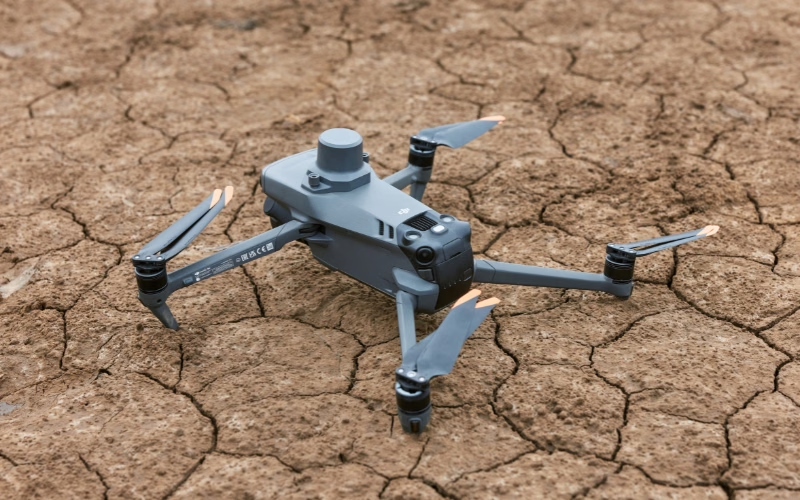
A strong climate-focused CSR strategy starts with clear priorities and measurable action. Businesses do not need to do everything at once. The goal is to choose initiatives that align with the company’s values, audience, and sustainability goals, then build a program that can be tracked and communicated responsibly.
Start by clarifying what your business wants to support. Your priorities may include biodiversity, forest restoration, community resilience, employee engagement, customer participation, coastal restoration, urban restoration, or carbon sequestration. Clear priorities make it easier to choose the right projects and communicate why they matter.
Work with a partner that can help connect your goals to available verified restoration projects. The right project should align with your audience, geography, values, campaign needs, and sustainability priorities. For example, a brand with a strong coastal connection may choose mangrove restoration. A company focused on employee engagement may choose a project that can be tied to internal milestones. A customer-facing brand may choose a restoration campaign that customers can follow through a dashboard or impact page.
Choose initiatives with transparent data, project updates, and reporting tools. A measurable CSR program should show what project was supported, where it is happening, how progress is monitored, and what outcomes are being tracked or estimated. This helps teams communicate impact clearly and answer stakeholder questions with more confidence.
Connect CSR climate action to purchases, milestones, campaigns, events, internal programs, or social media engagement. Customer and employee engagement can make CSR more visible and participatory. It helps people see how individual actions connect to a broader climate program. Strong engagement campaigns should make the impact easy to understand. They should explain what action triggers support, what project is being funded, where the work is happening, and how progress can be followed.
Use specific, scoped language and avoid claims that go beyond the data available. Climate-focused CSR should be reported as an ongoing program, not a one-time announcement. As new project updates become available, businesses should refresh impact numbers, dashboards, claim language, and stakeholder communications. Responsible reporting helps businesses build trust over time.
veritree helps businesses connect corporate social responsibility and climate action through verified restoration, transparent reporting, and stakeholder-ready impact tools. From project selection to customer engagement, veritree gives companies a clearer way to turn CSR commitments into measurable restoration impact.
veritree’s team reviews planting partners and restoration projects before offering them to brands. This helps businesses choose from restoration opportunities that have gone through due diligence before they are presented as options. For CSR teams, this matters because project credibility is part of claim credibility. Businesses need to know that the projects they support have been reviewed and selected with care.
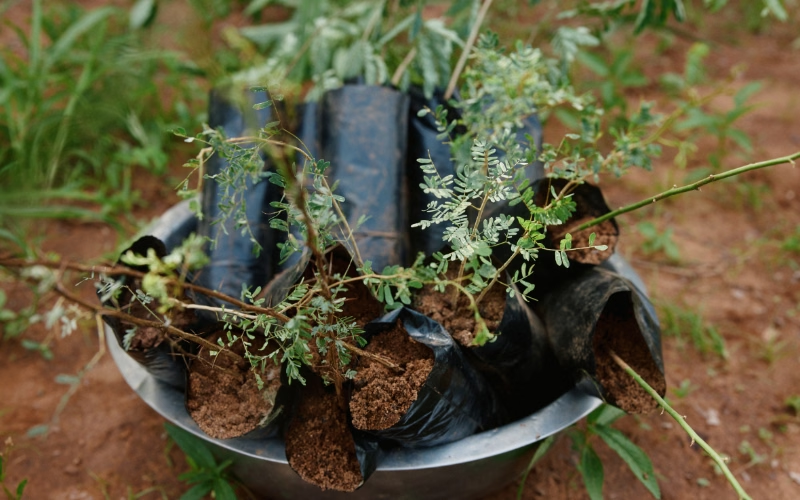
veritree’s team helps partners choose available projects that align with their goals, audience, campaign needs, and sustainability priorities. This helps companies build CSR programs that feel relevant to their brand and meaningful to their stakeholders.
Businesses can support verified restoration projects, including reforestation, mangrove restoration, kelp seaforestation, post-wildfire restoration, urban restoration, and other nature-based solutions. These projects can support environmental and social outcomes across areas like biodiversity, land, water, people, and carbon sequestration where applicable.
veritree’s platform supports project visibility, impact tracking, reporting, and stakeholder communication. Businesses can access dashboards, project updates, and reporting tools that help teams understand what is happening and share progress more clearly.
Brands can connect CSR programs to customer purchases, loyalty actions, employee milestones, events, digital impact experiences, and social media campaigns. This helps turn climate action into something people can participate in, follow, and share.
veritree helps brands communicate restoration activity with clearer, more specific, and better-scoped language. This helps businesses avoid vague claims and align their CSR communication with the data available.
Climate change and corporate social responsibility are no longer separate conversations. Businesses are expected to take action that supports people, nature, and long-term resilience. veritree helps companies turn CSR commitments into verified restoration impact through project due diligence, tailored project selection, transparent data, and reporting tools that make climate action easier to see, measure, and share. From customer-facing campaigns and employee engagement to ESG reporting and stakeholder communication, veritree helps businesses connect CSR to real restoration projects with measurable progress.
Build climate-focused CSR programs that support people, nature, and long-term environmental resilience.
Climate change and corporate social responsibility are connected because businesses are increasingly expected to take responsibility for their environmental impact. CSR programs can support climate action through operational improvements, verified restoration, employee engagement, customer campaigns, and transparent reporting.
CSR programs can address climate change by supporting verified restoration projects, reducing operational impact, engaging employees and customers, funding nature-based solutions, and reporting progress with clear data.
Examples include verified tree planting, forest restoration, mangrove restoration, kelp seaforestation, urban restoration, customer-facing impact campaigns, social media engagement campaigns, employee sustainability programs, and ESG reporting initiatives.
Climate action supports corporate social responsibility by helping businesses create measurable environmental and social impact. It can support ecosystems, communities, biodiversity, land and water health, and carbon sequestration where applicable.
Businesses can report on climate-focused CSR programs by sharing project data, restoration progress, monitoring updates, impact dashboards, and clear claims that explain what the program covers and how progress is being tracked.
veritree helps businesses connect climate change and corporate social responsibility through verified restoration projects, project due diligence, tailored project selection, impact data, reporting tools, and customer-facing impact experiences.
PREV BLOG