What Is Greenwashing? Meaning, Examples, and How to Avoid It
Read Now



December 8, 2023

The climate crisis is one of the most pressing issues of our time, and addressing it requires more than one solution. Businesses, governments, communities, and individuals all have a role to play in reducing emissions, restoring ecosystems, and supporting long-term climate resilience.
One approach gaining momentum is nature-based solutions to climate change. These solutions use the power of natural ecosystems to help address environmental challenges while supporting biodiversity, communities, land health, water systems, and estimated carbon to be sequestered.
For businesses, nature-based solutions offer a practical way to take climate action beyond internal operations. By supporting verified restoration projects, companies can help restore forests, coastlines, marine ecosystems, urban green spaces, and degraded landscapes while tracking impact through transparent data.
veritree helps businesses support verified nature-based solutions with project due diligence, tailored project selection, impact data, and reporting tools that make climate action easier to see, measure, and share.
Nature-based solutions are actions that protect, restore, or improve natural ecosystems while helping address environmental and social challenges. In the context of climate change, they can support ecosystem recovery, biodiversity, community resilience, and carbon sequestration over time.
Nature-based solutions can include:
At their best, nature-based solutions do more than support one climate metric. They help restore the natural systems people and the planet depend on.
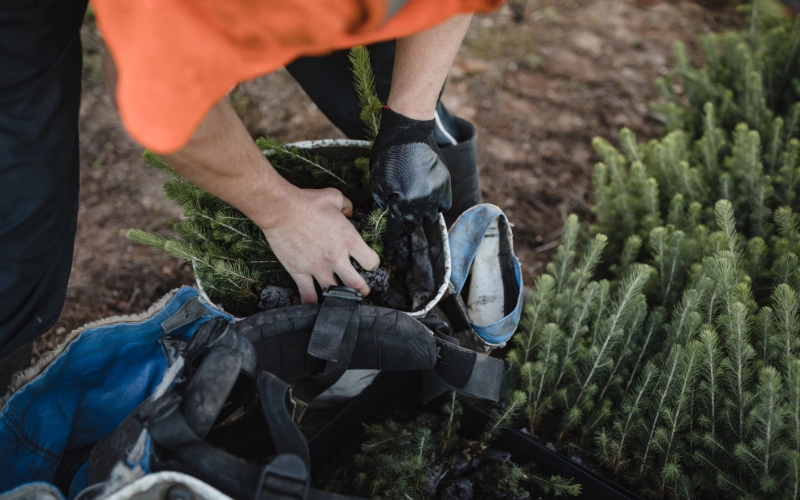
Nature-based solutions are important because climate change is not only an emissions issue. It is also connected to biodiversity loss, land degradation, water systems, food security, community resilience, and ecosystem health.
When ecosystems are degraded, they become less able to support life, regulate water, provide habitat, protect coastlines, and contribute to climate resilience. When they are restored, they can help strengthen the natural systems that support people, wildlife, and the planet.
Nature-based solutions can help by:
This is why nature-based solutions are increasingly important for companies building ESG, CSR, and corporate sustainability programs. They connect environmental action with measurable restoration outcomes that can be tracked and shared.
Nature-based solutions are often discussed in relation to carbon, but their value goes far beyond carbon alone.
A strong restoration project can support biodiversity, water systems, soil health, coastal resilience, local communities, and long-term ecosystem recovery. These broader outcomes are important because climate change, biodiversity loss, and land degradation are deeply connected.
For businesses, this also matters from a reporting and communication perspective. A restoration project should not be reduced to a single carbon claim. Instead, companies should explain the full scope of what the project supports and use careful carbon language when carbon is referenced.
Nature-based solutions can take many forms depending on the ecosystem, region, and restoration goals. Below are some of the most common examples.
Reforestation and verified tree planting help restore areas where forests have been degraded, damaged, or removed. Verified tree planting can support biodiversity, habitat recovery, land health, community outcomes, and carbon sequestration over time. But tree planting should not be treated as a one-time activity. Strong projects require the right species, the right location, monitoring, reporting, and long-term restoration context.
Forest restoration goes beyond planting trees. It focuses on helping damaged or degraded forest ecosystems recover over time. This can include native species planting, natural regeneration, biodiversity support, post-wildfire recovery, and long-term monitoring. Forest restoration can help rebuild habitat, improve land health, and support climate resilience. Businesses can explore verified restoration opportunities through veritree’s global restoration projects.
Agroforestry integrates trees into agricultural landscapes. This can help improve soil health, support biodiversity, diversify livelihoods, and make farming systems more resilient. Agroforestry is especially valuable because it connects restoration with food systems, land management, and community outcomes.
Wetlands are important ecosystems that support water quality, flood protection, biodiversity, and carbon-rich landscapes. Restoring degraded wetlands can help improve water systems, provide habitat for wildlife, reduce erosion, and support community resilience.
Mangroves are coastal forests that support shoreline protection, marine biodiversity, and community resilience. They also play an important role in blue carbon ecosystems. Mangrove restoration can help restore coastal areas, support fish habitats, protect shorelines, and create benefits for nearby communities.
Kelp forests are underwater ecosystems that support marine biodiversity and ocean health. Kelp seaforestation helps restore marine ecosystems by supporting the growth and recovery of kelp forests. These projects can contribute to healthier oceans, habitat creation, and broader marine restoration goals.
Severe wildfires can damage forests, watersheds, soil systems, and habitats. Post-wildfire restoration helps landscapes recover after fire events by supporting native species, erosion control, habitat recovery, and long-term resilience. veritree supports post-wildfire restoration projects that help restore damaged landscapes and support ecosystem recovery.
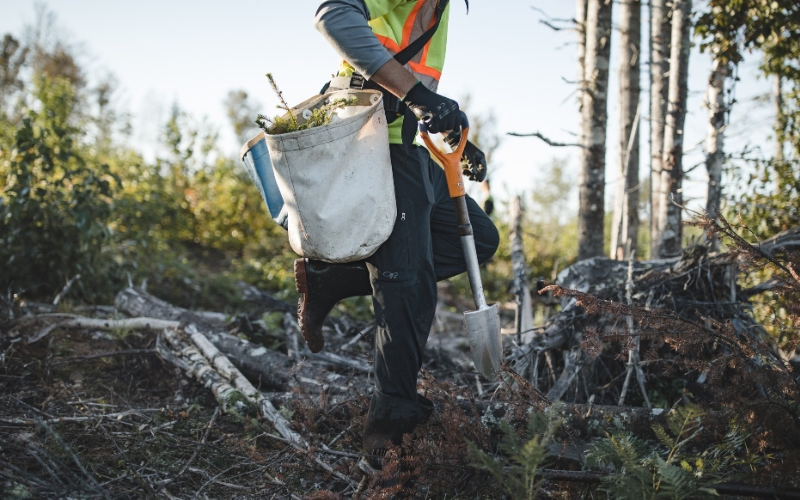
Nature-based solutions are not limited to remote forests or coastlines. Cities also need restoration. Urban restoration can help expand green spaces, support tree equity, improve urban biodiversity, and create healthier community environments. Urban restoration is especially important as cities face heat, pollution, stormwater pressure, and unequal access to nature.
For businesses, nature-based solutions can turn climate action into something more visible, measurable, and connected to real ecosystems.
Instead of relying only on broad sustainability commitments, companies can support specific restoration projects tied to landscapes, communities, biodiversity, and impact goals.
Nature-based solutions can support:
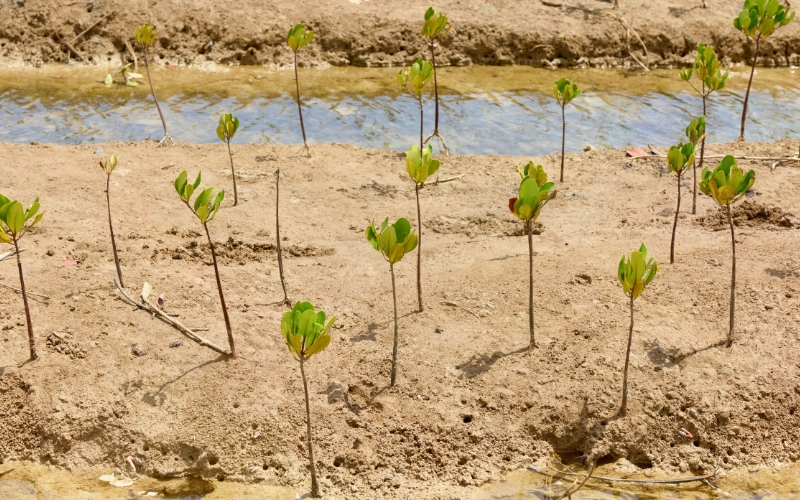
For example, a company may support verified tree planting for every purchase, fund mangrove restoration as part of a coastal resilience initiative, support kelp restoration through a blue economy campaign, or connect employee milestones to restoration progress.
Through climate action for businesses, veritree helps companies connect restoration projects to business goals, customer engagement, and measurable impact.
Nature-based solutions can become part of a broader sustainability strategy when they are tied to clear goals, project data, and responsible reporting.
Nature-based solutions can support environmental and social ESG priorities through restoration, biodiversity support, land and water outcomes, community benefits where relevant, and transparent impact reporting. They can also help ESG teams show that climate action is connected to specific projects and measurable progress.
CSR programs often focus on how a business contributes to people, communities, and the planet. Verified restoration can help CSR teams connect corporate responsibility to real-world climate and ecosystem action. For example, a CSR campaign may support reforestation, mangrove restoration, or urban greening while engaging employees, customers, or community stakeholders.
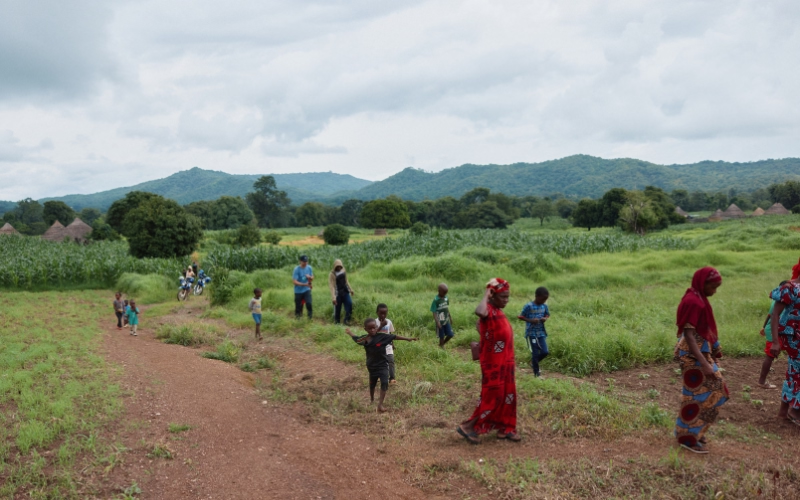
Nature-based solutions can help businesses move from broad sustainability commitments to measurable action. When projects are selected carefully and reported clearly, they can support sustainability goals while giving internal and external stakeholders a clearer view of progress.
Nature-based solutions can support corporate climate action by helping businesses invest in restoration projects that support ecosystem health, biodiversity, and long-term climate resilience. They should not replace emissions reduction, but they can complement a broader climate strategy when used responsibly.
Nature-based solutions need reporting to be credible.
Impact reporting helps businesses understand what restoration activity is taking place, where it is happening, what outcomes are being measured, and how progress changes over time.
For nature-based climate action, reporting may include:
veritree’s measurable impact approach helps businesses understand restoration outcomes beyond simple tree counts. The platform supports project visibility, impact tracking, dashboards, reporting, and stakeholder communication.
As sustainability claims face more scrutiny, businesses need to communicate nature-based climate action carefully.
Broad claims like “green,” “eco-friendly,” “climate neutral,” or “sustainable” can create risk if they are vague, unsupported, or not clearly scoped. Even when a business supports a real restoration project, the public claim still needs to match the evidence behind it.
For example, instead of saying: “We are a sustainable brand.”
A stronger claim would be: “Our campaign supports verified restoration activity in [project location], with project progress tracked through [reporting tool].”
Instead of saying: “Your purchase offsets emissions.”
A more careful claim would be: “Your purchase supports verified restoration activity in [project location]. Project reporting includes planting activity, restoration updates, and estimated carbon to be sequestered where applicable.”
This kind of language is more specific, easier to support, and less likely to imply more than the project data can prove.
Brands can also use marketable content and impact reporting tools to help customers, employees, and stakeholders understand what a restoration campaign supports.
Businesses can support nature-based solutions by choosing verified restoration projects that align with their goals, audience, values, and reporting needs.
A strong approach includes five steps.
Start by clarifying what your business wants to support. This may include biodiversity, forest restoration, marine restoration, community impact, urban greening, coastal resilience, or carbon sequestration.
The right project should fit your sustainability priorities and the story you want to tell. For example, a brand focused on ocean health may choose kelp or mangrove restoration, while a company focused on urban communities may choose urban restoration.
Choose projects with transparent data, monitoring, and reporting tools. This helps your team understand what progress is being made and gives stakeholders a clearer view of the work being supported.
Nature-based solutions can become part of customer campaigns, employee milestones, events, loyalty programs, product launches, or ESG initiatives. When people can see and understand the impact, they are more likely to connect with the program.
Use specific, scoped language and support claims with project data. Responsible reporting helps businesses communicate impact without overclaiming.
veritree helps businesses support nature-based solutions through verified restoration projects, project due diligence, tailored project selection, impact data, and reporting tools.
veritree’s team reviews planting and restoration projects before offering them to brands. This gives businesses access to restoration opportunities that have already gone through due diligence before being presented as options.
Before a brand becomes a partner, veritree’s team helps choose available projects that align with the brand’s goals, audience, campaign needs, sustainability priorities, and reporting needs.
Businesses can support verified reforestation, forest restoration, mangrove restoration, kelp seaforestation, post-wildfire restoration, urban restoration, and other nature-based solutions through veritree’s restoration project portfolio.
veritree’s platform supports project visibility, monitoring, reporting, dashboards, and stakeholder communication. This helps businesses track progress and communicate restoration activity with clearer project data.
Brands can connect nature-based climate action to purchases, loyalty actions, employee milestones, events, and digital impact experiences.
veritree helps brands communicate restoration activity with clearer, more specific, and better-scoped language. This is increasingly important as businesses face more scrutiny around environmental claims and greenwashing risk.
Nature-based solutions to climate change give businesses a way to support real ecosystems, real communities, and measurable restoration impact. They can help restore forests, coastlines, marine ecosystems, urban green spaces, and degraded landscapes while supporting biodiversity, resilience, and estimated carbon to be sequestered where applicable.
veritree helps companies support verified restoration projects through project due diligence, tailored project selection, transparent impact data, and reporting tools that make climate action easier to see, measure, and share.
Support nature-based climate action with confidence.
Explore Verified Projects.
Reach Out Today.
Nature-based solutions to climate change are actions that protect, restore, or improve natural ecosystems while supporting climate resilience. Examples include reforestation, forest restoration, mangrove restoration, kelp seaforestation, agroforestry, wetland restoration, and urban restoration.
Nature-based solutions help with climate change by restoring ecosystems, supporting biodiversity, improving land and water health, strengthening community resilience, and contributing to carbon sequestration.
Examples include verified tree planting, forest restoration, mangrove restoration, kelp seaforestation, post-wildfire restoration, agroforestry, wetland restoration, coastal restoration, and urban restoration.
Businesses can support nature-based solutions to take measurable climate action, strengthen ESG and CSR programs, engage customers and employees, and invest in restoration projects that support people and the planet.
Businesses can report on nature-based solutions by sharing project location, restoration type, progress updates, impact data, biodiversity indicators, community outcomes, land and water metrics, and estimated carbon to be sequestered where applicable.
veritree helps businesses support nature-based solutions through verified restoration projects, project due diligence, tailored project selection, transparent impact data, reporting tools, and customer-facing impact experiences.
PREV BLOG