

We acknowledge that our company is based on the traditional, ancestral and unceded territories of the Coast Salish Nations — xʷməθkʷəy̓əm (Musqueam), Sḵwx̱wú7mesh (Squamish) and səlil̓ilw̓ətaʔɬ (Tsleil-Waututh).


The way brands talk about sustainability is changing. For years, businesses have used terms like:

Green

Eco-Friendly

Carbon Neutral

Climate Positive

Sustainable
to describe products, services, campaigns, and corporate initiatives. Some of these claims are backed by real environmental action. Others are vague, overstated, or difficult for customers to verify.
The EU Greenwashing Directive is designed to close that gap.
Officially known as Directive 2024/825, or the Empowering Consumers for the Green Transition Directive, this legislation strengthens consumer protection rules around environmental claims. It is part of a larger shift toward clearer, more specific, and more evidence-backed sustainability communication.
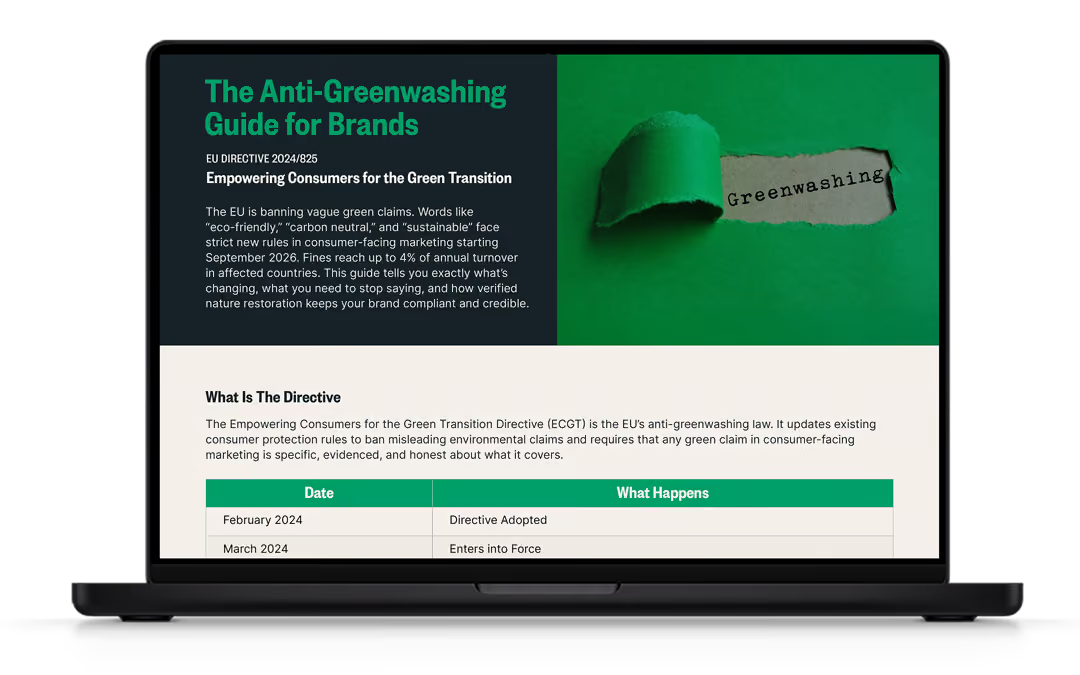
For brands, the message is simple: sustainability claims need proof.If your business sells to EU consumers, markets to EU consumers,
or makes environmental claims in consumer-facing channels, now is
the time to review your language. That includes your website, packaging, product pages, paid ads, social media, sustainability reports, customer campaigns, ecommerce copy, and partnership messaging.
The brands that prepare early will be in a stronger position to communicate
sustainability impact with confidence.

The EU Greenwashing Directive is a consumer protection law that targets misleading environmental claims in business-to-consumer marketing.
It updates existing EU consumer protection rules to better address greenwashing, vague sustainability language, unsupported environmental claims, misleading product comparisons, and sustainability labels that are not backed by credible certification schemes.
In plain language, the directive is meant to prevent brands from making environmental claims that sound stronger than the evidence behind them.
This matters because consumers are increasingly making decisions based on sustainability. When a product, service, or campaign says it is “green,” “eco-friendly,” or “better for the planet,” consumers should be able to understand what that claim actually means.
They should also be able to trust that the claim is backed by evidence.
The directive pushes businesses toward more specific communication. Instead of making broad claims about being sustainable, brands will need to explain the specific environmental action being taken, what the claim applies to, and what evidence supports it.
A sustainability claim should not ask consumers to simply trust the brand. It should give them enough information to understand the claim.
The EU Greenwashing Directive matters because sustainability claims are no longer being treated as soft marketing language. They are becoming claims that need to be specific, accurate, and supported.
For brands, this creates both accountability and opportunity.
Broad phrases like “eco-friendly,” “green,” “climate neutral,” or “sustainable” can create confusion if they are not clearly explained or backed by strong evidence. Consumers need to know what the claim actually refers to, whether it applies to a product, a campaign, a project, or the entire business, and what proof supports it.
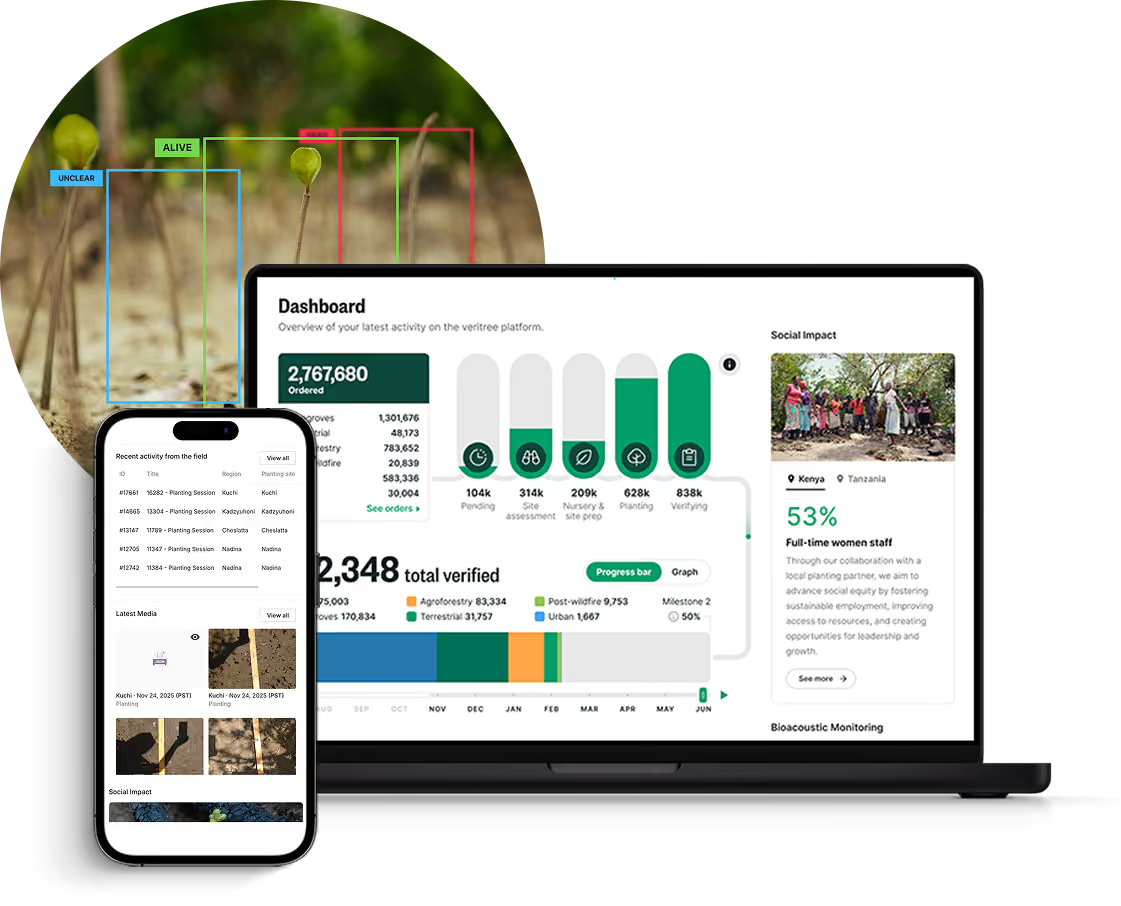
At the same time, brands with real, verified environmental action have an opportunity to stand out. When sustainability claims are grounded in transparent reporting, project-level data, and clear documentation, they become easier for customers, employees, investors, and stakeholders to trust.
This is especially important for businesses investing in restoration, tree planting, biodiversity, blue carbon, coastal ecosystems, and nature-based solutions. These initiatives can create meaningful environmental impact, but the way they are communicated matters.
A strong claim should be specific enough to explain what happened,
where it happened, and how progress is tracked.
Need a clearer breakdown of the rules?
Download the Anti-Greenwashing Directive Guide.
The EU Greenwashing Directive applies from September 27, 2026.
For many companies, environmental language appears across multiple teams, channels, and assets.
A proper review may involve:

Websites and landing pages
Product pages and ecommerce copy
Packaging and labels
Paid advertising
Social media campaigns
Retail partner content
Influencer or affiliate messaging
Sustainability reports
ESG and CSR materials
Email campaigns
Sales decks and customer-facing presentations
Campaign pages tied to restoration, tree planting, or climate action
For brands with packaging, retail distribution, or global marketing campaigns, updating claim language can take time. Internal approvals, legal review, design updates, retailer coordination, and campaign changes can all add complexity.
The directive is especially important for businesses making environmental claims to consumers in the EU.
This can include brands in:
Retail
Ecommerce
Fashion and apparel
Food and beverage
Consumer packaged goods
Travel and hospitality
Beauty and personal care
Technology
Home Goods
Financial services with consumer-facing sustainability products
Corporate sustainability campaigns with consumer-facing messaging
The directive is not only relevant to companies physically based in the EU. If a brand markets or sells
to EU consumers, its consumer-facing sustainability claims may need to be reviewed through this lens.
That makes the directive important for global brands, international ecommerce businesses,
and companies running sustainability campaigns that can be accessed by EU consumers.
The claims that need the closest review are usually the ones that sound broad, absolute, or difficult to prove.
These can include phrases like:
Eco-friendly
Green
Sustainable
Good for the planet
Planet-friendly
Environmentally responsible
Climate neutral
Carbon neutral
Climate positive
Carbon positive
Nature positive
Zero impact
Low impact
Carbon compensated
These words are not automatically unusable in every context, but they should trigger a closer look.
The issue is not only the word itself. The issue is whether the claim is specific, clearly explained, and supported by evidence.
For example, a brand saying “we are sustainable” is much broader than saying “we support verified mangrove restoration in [region], with project progress tracked through field-level data and shared through an impact dashboard.”
The first statement asks people to accept a broad brand claim.
The second explains the action, location, and evidence behind the program.
One of the biggest shifts under the directive is the treatment of generic environmental claims.
A generic environmental claim is a broad claim that suggests a product, service, brand, or business has a positive, reduced, or neutral environmental impact without clearly specifying what the claim means.
Examples may include claims like the following, when they are used without clear context:
Green
Eco-Friendly

Environmentally Friendly

Climate Friendly
Sustainable
To communicate more responsibly, brands should move away from broad environmental language and toward specific, evidence-backed claims.

Instead of saying:
We are an eco-friendly brand.

A more specific version could be:
We support verified tree planting projects in [region], with restoration progress tracked through field-level data and shared through transparent impact reporting.
Instead of saying:
This is a sustainable product.
A more specific version could be:
This product uses packaging made with [X]% recycled content.

Instead of saying:
We are helping the planet.

A more specific version could be:
We are supporting verified coastal ecosystem restoration in [region] through a mangrove restoration project that helps restore habitat and strengthen coastal resilience.
Specificity makes the claim clearer. It also gives the audience a better way to understand what the company is actually doing.
Carbon and climate-related claims are some of the most sensitive areas of sustainability communication. Claims like “carbon neutral,” “climate neutral,” “carbon positive,” or “climate positive” need to be carefully scoped and supported. This is especially true when a product-level claim is based on offsetting rather than actual lifecycle impact.
For brands, the safest approach is to avoid using carbon language unless the company
has the data, methodology, and verification needed to support it.
This is especially important for restoration and tree planting programs.
Tree planting, mangrove restoration, and other nature-based solutions can be part
of a broader sustainability strategy. But supporting restoration does not automatically
make a product, purchase, or company carbon neutral. A stronger approach is to describe the actual restoration activity being supported.
Instead of saying:
Your purchase is carbon neutral.
A more specific version could be:
Your purchase supports verified tree planting in [region]. Project progress is tracked through field-level data and shared through our impact dashboard.
Instead of saying:
We offset every order.
A more specific version could be:
We support verified restoration projects as part of our broader sustainability program. This does not represent a product-level carbon neutral claim.
Do not let a restoration project carry a claim it was not designed to prove.
For more examples of carbon and climate claim language, download the Anti-Greenwashing Directive Guide.

The directive also raises the bar for sustainability labels, badges, and certifications.Many brands use icons, seals, logos, or badges to communicate sustainability.
These may appear on packaging, websites, product pages, ads, or campaign landing pages.
The challenge is that labels can create a stronger impression than the evidence behind them.
A sustainability badge may seem official to consumers, even if it was created internally by the company. A green leaf icon may suggest environmental benefits, even when the claim is not clearly explained. A logo that looks like a certification may imply independent verification, even if no credible certification scheme is involved.
Brands should review any sustainability label or badge and ask:

Who created this label?
Is it based on a certification scheme?
Is it independently verified?
What does the label actually mean?
Could consumers misunderstand it?
Is the explanation clear and easy to find?
Is the label connected to a specific product, project, or company-wide claim?
If a label or badge is vague, self-created, or unclear, it may need to be revised.
Many brands make future-facing sustainability claims.
These can include statements like:
We will be net zero by 2030.
We are becoming climate positive.
We are on a path to sustainability.
We will eliminate our environmental impact.
We are working toward nature positive operations.
Future goals can be valuable, but they need to be backed by a clear and realistic plan.
A future environmental claim should be tied to measurable targets, timelines, resources, and reporting. It should not present an ambition as though it is already achieved.
Instead of saying:
We will be climate positive by 2030.
A more specific version could be:
We are working toward [specific target] by 2030 and will publish annual progress updates through [reporting channel].
Instead of saying:
We are becoming a sustainable company.
A more specific version could be:
We are implementing a sustainability program focused on [specific actions], including verified restoration projects, emissions reduction initiatives,
and annual progress reporting.
The goal is not to avoid talking about future commitments.
The goal is to communicate them clearly and honestly.
Planning future sustainability claims? Download the Anti-Greenwashing Directive Guide before finalizing your language.
Tree planting and restoration claims can be powerful,
but they need to be communicated carefully.
A company may support a real restoration project, but if the public claim is too broad, it can still create confusion.
For example, supporting tree planting does not automatically mean:
A stronger tree planting or restoration claim should explain the specific project being supported.
Strong restoration claims may include:
This is where verified impact reporting becomes important. It gives brands the evidence needed to support claims with more confidence.
Before and After:
Instead of saying:
We are a sustainable company.
Say:
We support verified restoration projects in [region] as one part of our broader sustainability strategy.
Instead of saying:
This product is eco-friendly.
Say:
This product uses packaging made with [X]% recycled content.
Instead of saying:
We are saving the planet.
Say:
We are supporting verified mangrove restoration in [region], helping restore coastal habitat and support biodiversity.
Instead of saying:
We plant trees to offset every order.
Say:
For every order, we contribute to verified tree planting in [region]. Planting progress is tracked through field-level data and shared through our impact dashboard.
Instead of saying:
We are climate positive.
Say:
We support verified nature-based restoration projects as part of our climate and sustainability program. Carbon-related outcomes are reported only where project data supports them.
Instead of saying:
Our brand is nature positive.
Say:
We support verified biodiversity restoration through [project type] in [region], with progress tracked through project-level reporting.
Brands should start with a sustainability claim audit.
This means identifying every place where the business makes an environmental claim, then reviewing whether each claim is specific, accurate, and supported by evidence.

Collect Your Claims
Gather sustainability language from websites, product pages, packaging, ads, social posts, reports, emails, landing pages, and sales materials.

Flag Broad Language
Look for terms like green, eco-friendly, sustainable, carbon neutral, climate positive, planet-friendly, nature positive, and zero impact.

Identify the Evidence
For each claim, ask what data, documentation, certification, methodology, dashboard, or report supports it.

Clarify the Scope
Decide whether the claim applies to a product, campaign, project, purchase, business unit, region, or company-wide initiative.

Replace Vague Claims With Specific Language
Rewrite broad claims so they explain the action, project, location, timeline, and evidence.

Add Context Where Needed
If a claim has limits, explain them clearly. Do not let consumers assume more than the claim can support.

Align Your Teams
Marketing, sustainability, legal, leadership, and sales teams should use the same approved claim language.

The strongest sustainability claims are not always the most dramatic. They are the clearest.
Strong claims usually have five things in common.

Specific Action
They explain what the company did or funded.
Clear Scope
They explain whether the claim applies to a product, campaign, project, purchase, or company-wide initiative.
Evidence
They are backed by data, documentation, reporting, or verification.

Location or Context
They explain where the impact happened or what ecosystem, community, or project is involved.

Responsible Limits
They do not overstate the outcome or imply more than the evidence supports.
For brands, this approach can make sustainability communication more credible and more compelling. It gives audiences more than a claim. It gives them a reason to believe it.
The strongest sustainability claims are not the biggest claims.
They are the clearest ones.
Use the Anti-Greenwashing Directive Guide to pressure-test
your current claims.
Verified impact reporting helps close the gap between sustainability action and sustainability communication.
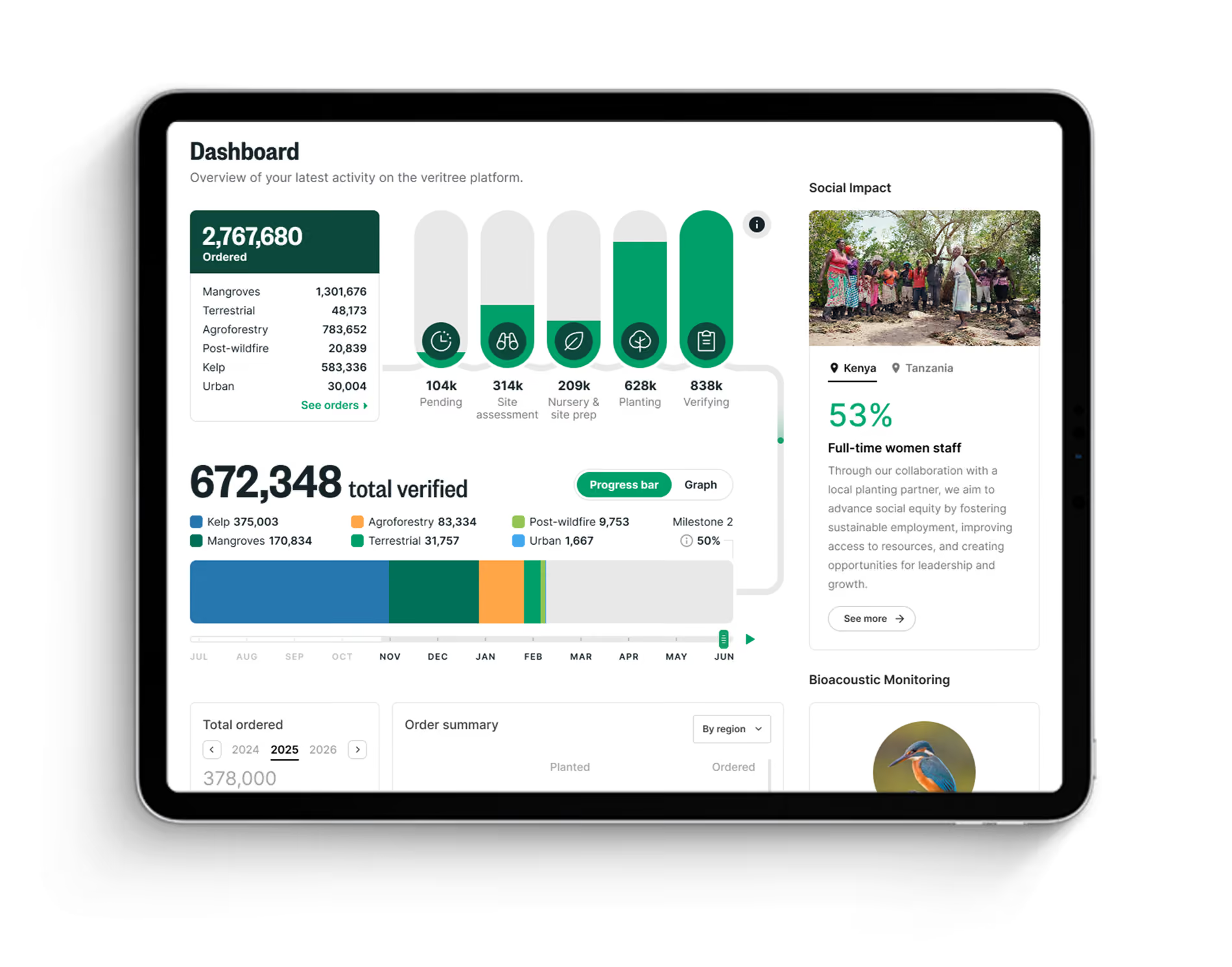
For companies supporting restoration, impact reporting can help show:
This matters because greenwashing often happens when a claim says more than the data can support. Verified reporting gives teams a clearer foundation for responsible communication.
It also makes sustainability storytelling stronger. Instead of relying on generic green language, brands can share real project details, field updates, visuals, and progress.
veritree helps businesses support verified nature-based solutions and communicate impact with more confidence.
Through transparent data, project tracking, and field-level reporting, veritree helps companies move from broad sustainability promises to clearer, project-specific impact communication.
veritree can support brands with:

Project Matching
veritree helps businesses identify restoration projects that align with their sustainability goals, audience, geography, and impact priorities.

Verified Implementation
Restoration projects are supported by on-the-ground partners and technology-enabled project tracking.

Impact Tracking
Businesses can access transparent data, dashboards, and project updates that make restoration progress easier to understand and share.

Scoped Claim Language
veritree helps businesses communicate restoration impact in a way that reflects what the project is designed and verified to do.

Field-Level Storytelling
Project stories, images, videos, and updates help brands communicate the people, places, and ecosystems behind their impact.
This matters because greenwashing often happens when a claim says more than the data can support. Verified reporting gives teams a clearer foundation for responsible communication.
It also makes sustainability storytelling stronger. Instead of relying on generic green language, brands can share real project details, field updates, visuals, and progress.
The EU Greenwashing Directive is more than a regulatory update. It is a sign that sustainability communication is becoming more evidence-driven.
For brands, that means vague environmental language is no longer enough.
Consumers want to understand what companies are doing. Regulators want claims to be clear and supportable. Internal teams need consistent language they can use across marketing, reporting, and customer communication.
The brands that prepare early will be better positioned to build trust.
That starts with real action. It continues with transparent reporting. And it depends on claims that are specific, accurate, and backed by evidence.veritree helps businesses support verified restoration projects, track progress through transparent data, and communicate sustainability impact with confidence.
Download the Anti-Greenwashing Directive Guide.
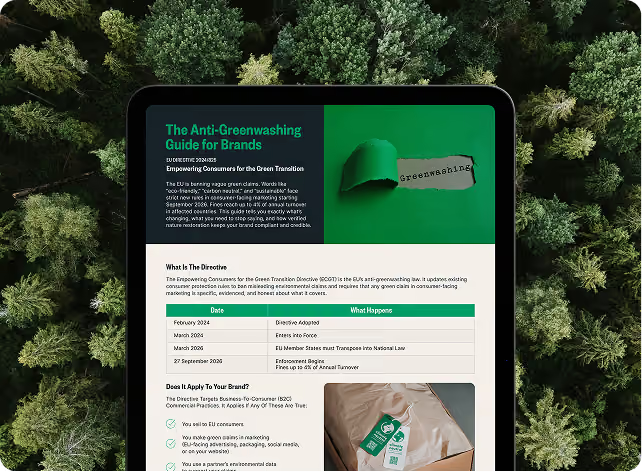
The EU Greenwashing Directive commonly refers to Directive 2024/825, also known as the Empowering Consumers for the Green Transition Directive. It strengthens consumer protection rules around misleading environmental claims, vague green claims, sustainability labels, and future environmental performance claims.
The rules apply from September 27, 2026. Brands that market or sell to EU consumers should review their environmental claims before this date.
The directive affects consumer-facing environmental claims, including broad claims like “eco-friendly,” “green,” “sustainable,” “carbon neutral,” “climate positive,” and similar language when those claims are not clearly specified or supported by evidence.
Non-EU companies may need to pay attention if they sell to EU consumers or make consumer-facing sustainability claims in EU markets. Global brands should review claims that may be visible or directed to EU consumers.
Brands can prepare by auditing sustainability claims, removing vague language, supporting claims with evidence, clarifying scope, reviewing carbon and climate claims carefully, and using verified impact reporting to support environmental communication.
Verified impact reporting helps reduce greenwashing by giving brands clearer evidence behind their sustainability claims. It can show where a project is happening, what action was taken, how progress is tracked, and what outcomes can be responsibly communicated.
