Growing Food Security in West Bengal
Read Now



December 16, 2025

Mangrove ecosystems are one of the most powerful allies we have in restoring coastlines and strengthening local communities. They also support an extraordinary range of wildlife, serving as nurseries for fish, feeding grounds for birds, and habitat for countless marine and terrestrial species. However, these coastal forests are under serious threat globally: around 50% of all mangrove ecosystems are now classified as vulnerable to collapse, mainly due to human-driven coastal development, aquaculture-driven deforestation, pollution, and climate change1.
Our work across East Africa centres on helping coastal communities restore these critical forests, strengthen climate resilience, and support biodiversity. The veritree team frequently visits the restoration sites in Kenya and Tanzania to assess restoration progress, train local planting teams on the newest veritree tools, and evaluate the impact the project is having on both the environment and the people.
Below, we break down the key field insights from the most recent trip to the site:
On top of deepening our relationships with the local planters to clarify expectations and shared goals for the year ahead, the veritree team worked on enhancing the veritree App, which enables planting partners to capture on-the-ground data, track progress, and ensure that trees planted are verified and monitored over time. This included field-testing a new error-flagging feature that helps improve data collection and streamline communication between our teams. To ensure data accuracy, we cross-checked what was submitted in the app with what we observed on the ground. The alignment was strong, confirming that the team is effectively using the veritree App, capturing all required planting session data and applying the proper methodologies for survivability checks.
Field monitoring is a critical part of ensuring long-term success. During the visit, the planting team walked us through each step of their workflow in the veritree App, from selecting sample plots to categorizing seedlings as alive, dead, or dormant. We also reinforced best practices through onsite training sessions to support effective planting, accurate data collection, and consistent monitoring.
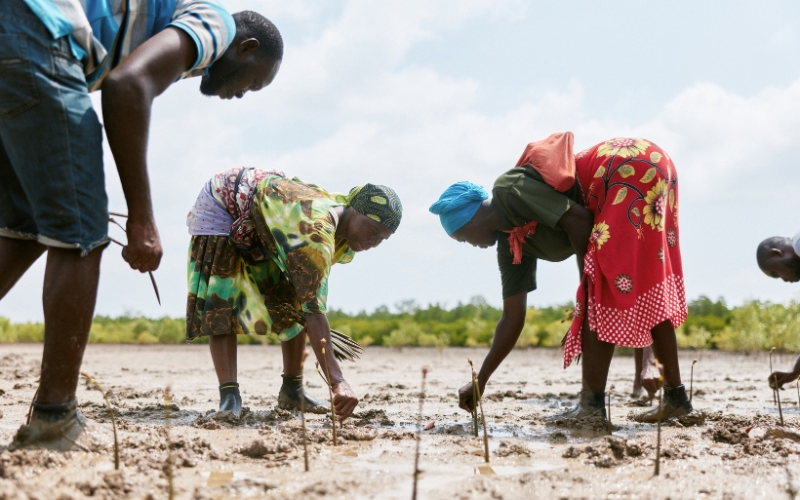
To ensure proper planting density, which is essential for healthy growth and long-term survivability, the teams use one-meter sticks during planting. These large rulers guide planters to space propagules and seedlings at the correct distances. The photos of these meter sticks also help verify that partners are following our planting density requirements.

Across multiple planting sites, we saw firsthand the variety of restoration work taking place. At several locations, teams were actively digging trenches. These trenches are essential for ensuring young mangroves can establish roots in areas where survival would otherwise be low. This short video explains the role of trenches in mangrove restoration.
We visited several on-site nurseries to learn how seedlings and propagules are sourced, grown, and tracked. This included how long seedlings remain in nurseries, how locations are selected, and the logistics of keeping up with planting demand. Seeing these operations up close highlighted the care and expertise required to maintain a consistent supply of healthy planting material.

We also collected updated multispectral drone imagery across active and older sites. These aerial views allowed us to assess canopy development and overall site health in detail. At several older sites, we were able to take progress photos of mangroves that had grown well above head height.
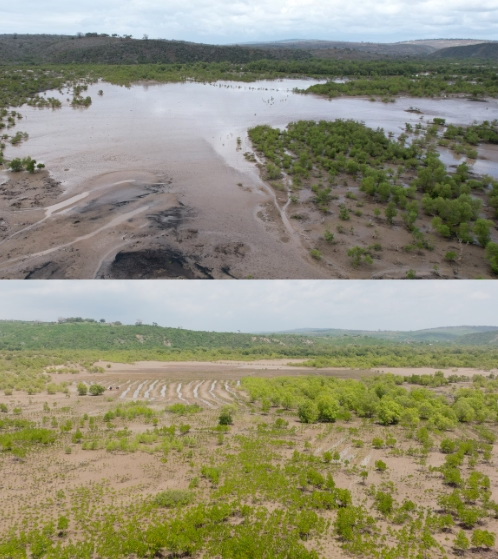
Observing these thriving trees was a powerful reminder of the resilience of mangrove ecosystems and the impact that thoughtful, science-driven restoration can have over just a few years.
Community engagement is fundamental to successful restoration. Our planting partner works closely with local villages and towns during site selection, including multiple community meetings where they explain restoration goals, employment opportunities, and how community knowledge shapes the project. By involving community members early and offering transparent conversations about land use, the project builds trust and reduces risks of future disturbance.
Throughout the trip, we heard personal stories that highlight how this restoration project continues to enhance livelihoods. Here are some examples of community impact:
At older restoration sites, communities reported noticeable ecological improvements. People pointed out clearer water, more bird activity, and increases in local fish populations. For many planters and nearby households, fishing remains a crucial livelihood, making these ecological gains especially meaningful.
Together with the planting partners, our teams continue to innovate and apply data and science-based approaches to enhance the project further. Our efforts aim to refine site-specific strategies, further enhance our data collection and monitoring, and ensure that restored areas reflect the complexity of natural mangrove ecosystems.
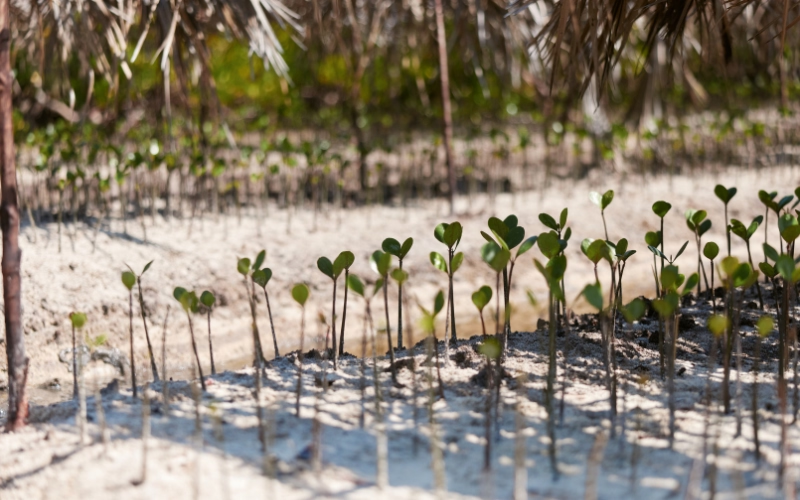
Field visits like this underscore the importance of restoration work. They remind us that restoration is as much about people as it is about ecosystems. By combining technology, local expertise, and community engagement, we can restore degraded areas, support livelihoods, and protect coastal resilience for the future. Seeing thriving older mangroves, carefully planted seedlings, and the dedication of local teams reinforces our confidence in the long-term impact of these projects and the essential role restoration plays in protecting communities and nature alike.
PREV BLOG