Climate Change and Corporate Social Responsibility
Read Now



August 15, 2023

Biodiversity is important to ecosystems because it helps natural systems remain balanced, functional, and resilient. Every species contributes in a different way. Plants produce food and habitat, pollinators help vegetation reproduce, fungi and microorganisms cycle nutrients, and predators help regulate animal populations.
These interactions allow ecosystems to provide essential benefits such as clean water, healthy soil, pollination, climate regulation, and food production. When biodiversity declines, these relationships can weaken, leaving ecosystems more vulnerable to disease, invasive species, habitat disruption, and changing environmental conditions.
The World Health Organization notes that healthy ecosystems provide critical services including fresh water, clean air, natural medicines, food security, and the regulation of air, water, and soil quality.
Biodiversity does more than increase the number of species found in an area. It supports the relationships and natural processes that allow ecosystems to function over time.
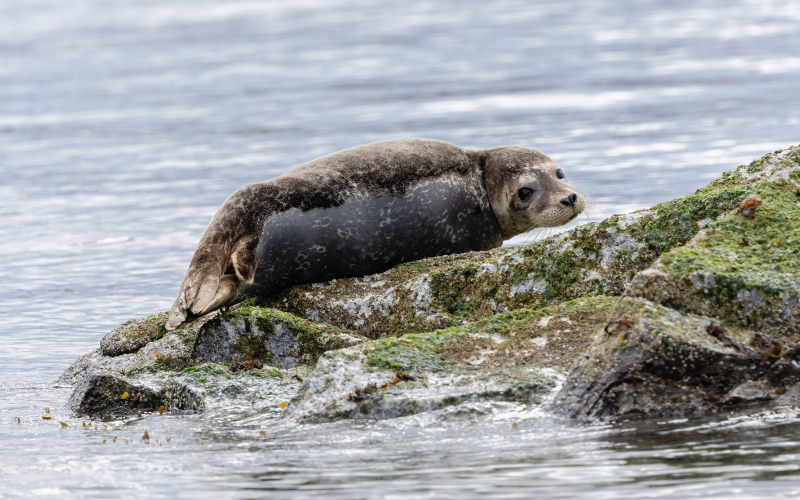
Every ecosystem contains interconnected food webs. Plants, insects, birds, mammals, fungi, and microorganisms depend on one another for food, habitat, reproduction, and population control.
A change affecting one species can spread throughout the ecosystem. For example, the decline of an important pollinator may affect the plants it pollinates, the animals that eat those plants, and the predators that depend on those animals.
Greater biodiversity can give ecosystems more ways to maintain important functions when one species or relationship is disrupted. This does not mean every species performs the same role. Instead, a wider variety of species helps support a stronger and more interconnected natural system.
Ecosystems regularly experience stress from drought, fire, storms, pests, diseases, habitat changes, and human activity.
Biodiverse ecosystems may be better equipped to adapt and recover because they contain a wider variety of species, traits, and ecological relationships. Some species may be more tolerant of drought, while others may be better suited to periods of heavy rainfall, temperature change, or pest pressure.
When biodiversity is reduced, ecosystems may have fewer ways to respond to changing conditions. This can make them more vulnerable to environmental disruption and slow their recovery.
Healthy soil is a living ecosystem. It contains fungi, bacteria, insects, worms, plant roots, and other organisms that help break down organic material, cycle nutrients, retain water, and support plant growth.
The Food and Agriculture Organization of the United Nations explains that below-ground biodiversity contributes to healthy soils, nutrient cycling, water retention, water purification, and carbon storage. Aquatic species also depend on the food, oxygen, and habitat created by other organisms within their ecosystems.
Biodiversity also supports water quality. Forests, wetlands, riparian areas, and healthy soils can help slow runoff, stabilize land, and filter water as it moves through an ecosystem.
Plants further contribute to air quality and climate regulation by taking in carbon dioxide, releasing oxygen, and capturing certain airborne pollutants. Together, these natural processes support healthier ecosystems and communities.
Pollinators help flowering plants reproduce by moving pollen between flowers. This supports wild plant communities as well as many of the crops people rely on for food.
The Food and Agriculture Organization reports that approximately three-quarters of global food crop types depend at least partly on pollinators. Diverse pollinator communities can also make pollination more reliable as environmental conditions change.
Pollination supports more than crop production. Flowering plants provide food and habitat for other species, stabilize landscapes, and contribute to the structure of natural ecosystems. A decline in pollinators can therefore affect both food systems and the wider web of life.
People depend on biodiversity every day, even when the connection is not immediately visible.
Healthy ecosystems support:
According to the World Health Organization, human health depends on ecosystem resources and services such as fresh water, food, natural medicines, and the regulation of pests, diseases, air, water, and soil quality.
Biodiversity loss can weaken these systems. Communities may experience reduced water quality, less resilient food production, fewer natural resources, and greater exposure to climate-related disruption.
This is why protecting biodiversity is not only about conserving plants and wildlife. It is also about protecting the natural systems that support human health, livelihoods, and long-term well-being.
Biodiversity loss rarely has a single cause. It is often driven by several pressures that interact and compound over time.
The major direct drivers identified by the Intergovernmental Science-Policy Platform on Biodiversity and Ecosystem Services include changes in land and sea use, direct exploitation of organisms, climate change, pollution, and invasive alien species.
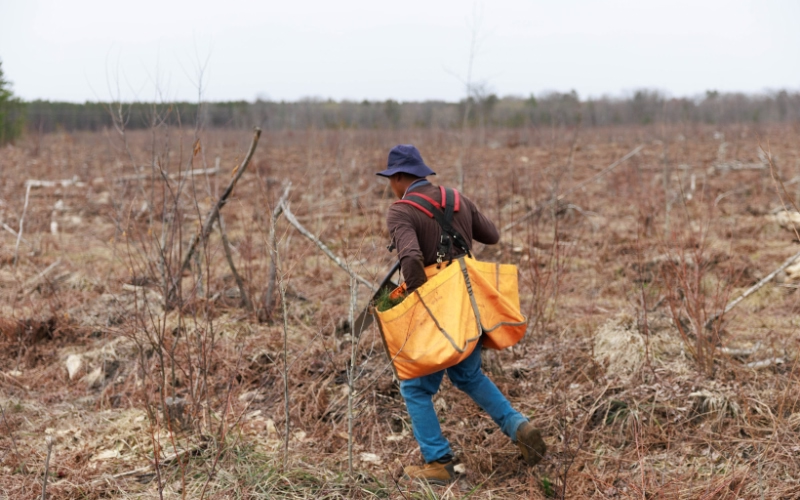
Forests, wetlands, grasslands, mangroves, and other habitats may be cleared or altered for agriculture, infrastructure, resource extraction, or urban development.
Even when part of a habitat remains, roads, development, and land conversion can divide it into smaller areas. This fragmentation can make it harder for species to move, find food, reproduce, and respond to environmental changes.
Deforestation removes habitat and changes the conditions that local species need to survive.
Land degradation can also reduce soil fertility, alter water systems, increase erosion, and make it harder for native vegetation and wildlife populations to recover.
Rising temperatures, changing rainfall patterns, more severe weather, ocean warming, and other climate-related changes can alter habitats and disrupt the timing of migration, reproduction, flowering, and food availability.
Species that cannot adapt or move quickly enough may face shrinking habitats and increased population pressure.
Chemicals, plastics, excess nutrients, and other pollutants can affect terrestrial, freshwater, coastal, and marine ecosystems.
Pollution may harm organisms directly or change the conditions they depend on, including water quality, soil health, and food availability.
Species introduced outside their natural range can sometimes spread quickly and compete with native species for food, habitat, or other resources.
Some invasive species may also introduce diseases, change ecosystem processes, or prey on native species that have few natural defences.
Unsustainable harvesting, fishing, hunting, logging, and water use can reduce species populations faster than they can recover.
When key species decline, the effects may extend to other organisms and ecological relationships throughout the ecosystem.
Protecting healthy ecosystems remains essential, but restoration can help degraded habitats recover and become more supportive of native life.
Restoration may involve planting native species, improving soil and water conditions, reconnecting fragmented habitats, supporting natural regeneration, or restoring coastal and marine ecosystems.
Great restoration programs can help:
Restoration should be designed around the needs of the local ecosystem. Planting one species across a large area may increase vegetation cover, but it does not automatically create a healthy or biodiverse habitat.
Projects should consider which species belong in the area, how they interact, what habitat conditions are needed, and how progress will be monitored over time.
veritree supports verified restoration projects across terrestrial, coastal, and marine ecosystems. Its approach looks beyond the number of trees planted to consider broader outcomes for biodiversity, people, land, and ecosystem recovery.
Businesses can also learn more about how nature-based solutions can support environmental and social goals through the protection, restoration, and responsible management of ecosystems.
Restoration activity alone does not confirm that biodiversity is recovering. Monitoring helps teams understand which species are present, how habitats are changing, and whether restoration is supporting a wider variety of life over time.
veritree uses technologies including bioacoustic monitoring and trail cameras to gather field-level information about biodiversity at selected restoration projects.
Birds can be useful indicators of ecosystem health because they respond to changes in habitat structure, food availability, and environmental conditions.
veritree’s bioacoustic sensors record bird songs and calls within restoration areas. These recordings can be analyzed to identify species, estimate abundance, assess species richness, and monitor habitat quality without needing to physically observe or capture wildlife.
This creates a record of what can be heard at a project and how those acoustic communities may change as restoration progresses.
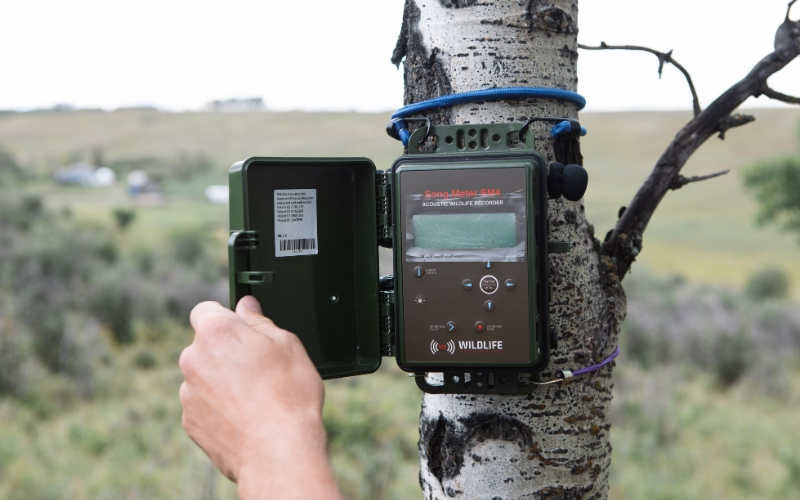
Learn more about bioacoustics and biodiversity monitoring.
Trail cameras provide another way to observe life within a restoration project.
Placed in the field, these cameras can document wildlife activity, species presence, changing seasons, vegetation growth, and other visible changes. They can capture animals that may otherwise be difficult to observe during routine site visits.
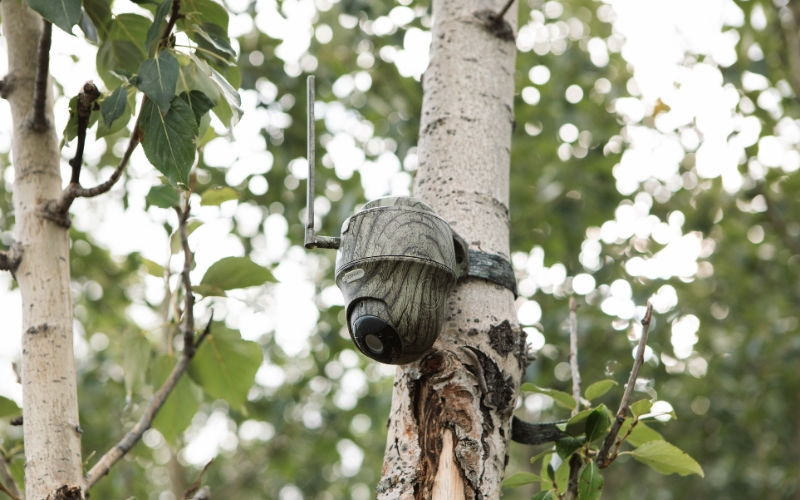
Together, bioacoustic monitoring, trail cameras, project data, and field observations can help create a more complete picture of ecosystem recovery.
Through its measurable impact approach, veritree helps businesses understand restoration progress through project-level monitoring, reporting, and accessible impact information.
Biodiversity is the variety of life within an area. It includes genetic diversity within species, the variety of different species, the diversity of ecosystems, and the relationships that connect them.
Biodiversity includes plants, animals, fungi, microorganisms, and the natural processes they support.
Biodiversity helps ecosystems remain balanced, resilient, and functional. Different species contribute to processes such as pollination, nutrient cycling, soil formation, water filtration, natural pest control, food web stability, and ecosystem recovery.
When biodiversity declines, ecosystems can become less stable and more vulnerable to disease, invasive species, extreme weather, habitat disruption, and climate-related stress.
The loss of one species may also affect other organisms that depend on it for food, habitat, pollination, or population control.
Biodiversity supports food production, fresh water, medicines, healthy soil, pollination, climate regulation, and many of the natural resources people depend on.
Healthy ecosystems also support livelihoods and can help communities respond to environmental change.
Restoration can support biodiversity by helping habitats recover, reconnecting fragmented ecosystems, improving soil and water conditions, and creating better conditions for native species to return.
The strongest restoration projects use locally appropriate approaches and monitor ecosystem progress over time.
Businesses can support biodiversity by reducing their environmental impacts, protecting important ecosystems, supporting verified restoration, and reporting nature-related progress transparently.
Companies can explore veritree’s biodiversity-focused solutions and global portfolio of restoration projects to identify projects aligned with their sustainability goals.
PREV BLOG