What Is Greenwashing? Meaning, Examples, and How to Avoid It
Read Now



August 4, 2026

When your business says it supports verified tree planting, what proof do you have behind the claim?
For sustainability managers, ESG leads, and CSR teams, impact reporting is not just a communications tool. It is the documentation layer behind every public claim, internal report, stakeholder update, and audit request.
As environmental claims face more scrutiny, businesses need to be ready to show what was funded, where the project took place, what data was collected, how progress is monitored, and how the claim is scoped. Verified tree planting can support credible climate action, but only when the documentation behind it is clear, accessible, and defensible.
veritree helps businesses support verified tree planting and restoration projects with project due diligence, transparent impact data, reporting tools, and stakeholder-ready documentation that make restoration progress easier to see, measure, and support with proof.
Reach out to explore impact reporting.
Download the Anti-Greenwashing Directive Guide to understand how the new EU rules may affect tree planting, restoration, and environmental claims.
Sustainability claims are no longer judged only by how they sound. They are judged by whether they can be supported.
For teams responsible for ESG, CSR, or sustainability data, the question is not only, “Did we support tree planting?” The more important question is, “Can we prove what we supported, how it was tracked, and what the claim actually covers?”

That matters because a verified tree planting claim may be reviewed by more than customers. It may also be questioned by regulators, auditors, legal teams, procurement teams, investors, executives, or board members. Each of those audiences may want to see the documentation behind the claim.
A defensible tree planting claim should be supported by clear records. Your team should be able to show what project was supported, where it happened, what activity took place, what data exists, what methodology was used, and what the claim does not cover.
Tree planting can be a meaningful part of a corporate climate action or sustainability program. But without impact reporting, the claim can be difficult to defend. A tree count on its own does not explain project scope, survival monitoring, ecosystem context, community connection, or how the data should be interpreted.
That is where impact reporting becomes essential.
Impact reporting is not only about telling a better sustainability story. For ESG and CSR teams, it is about creating the documentation trail that supports environmental claims.
When a brand publishes a claim about verified tree planting, forest restoration, climate action, or nature-based solutions, that claim needs support. It should be tied to evidence that explains what happened, where it happened, how the data was collected, and what the claim is allowed to mean.
This is especially important as greenwashing rules become stricter. The EU greenwashing directive raises the expectations around consumer-facing environmental claims, but the risk does not sit with marketing alone. Sustainability, ESG, CSR, legal, and compliance teams all need to understand whether claims can be substantiated before they go live.
veritree’s guide on greenwashing and environmental claims explains why businesses need to move away from vague sustainability language and toward claims that are backed by clear, verifiable action.
Impact reporting helps answer questions like:
When this information is organized and accessible, teams can respond to questions with more confidence. When it is missing, even a real sustainability initiative can become a claims risk.
If a verified tree planting claim is challenged, your team should be prepared to provide more than a receipt, certificate, or campaign summary.
A regulator, auditor, or legal reviewer may want to understand the full evidence trail behind the claim. That does not mean every claim needs to include every detail publicly, but the documentation should exist internally and be easy to retrieve.
A defensible claim should identify where the project is located and what the claim applies to.
This includes the project geography, ecosystem type, and program scope. The claim may apply to a specific product line, campaign, event, customer action, transaction, or reporting period. It should not imply a company-wide impact if the evidence only supports one initiative.
For example, a claim tied to a limited campaign should be written as a campaign claim, not as a broad statement about the entire brand.
Brands can use veritree’s Impact Hub and marketable content tools to help make project progress easier to understand and share with customers, employees, and other stakeholders.
A strong claim should be connected to project review and selection.
For veritree, the team conducts due diligence on planting and restoration projects before offering them to partners. This helps brands choose from projects that have been reviewed before they are made available.
That matters for claims defensibility because sustainability teams need to know that the project was not selected casually or added without review. Documentation should be able to show that project quality, fit, processes, and credibility were considered before the brand supported it.
After a brand becomes a partner, veritree’s team helps tailor project selection based on the brand’s goals, audience, sustainability priorities, and campaign needs. This process is part of how veritree works with partners to connect businesses with restoration opportunities that align with their goals.
A claim should be supported by records of the actual activity.
This may include the number of trees planted or restorative actions supported, the planting period, restoration milestones, planting evidence, project updates, and other activity records.
This information helps explain what the brand supported, instead of relying on vague language like “we help the planet” or “we restore nature.”
Businesses can explore the types of verified restoration work available through veritree’s global restoration projects, including tree planting, forest restoration, mangrove restoration, kelp seaforestation, urban restoration, and other nature-based solutions.
For tree planting and restoration claims, species and restoration approach matter.
Documentation should identify what was planted, why the species were selected, whether they are appropriate for the region, and how the planting supports the project’s restoration goals.
This helps move the claim beyond a simple tree count and into a clearer explanation of the restoration activity being supported.
A verified tree planting claim is stronger when it explains the restoration context behind the project, not just the number of trees funded.

A verified tree planting claim should be supported by monitoring and verification information.
This may include how data is collected, how planting activity is reviewed, how project progress is updated, and how the brand can access and share the reporting as the project lifecycle continues.
veritree’s technology and monitoring approach helps support project visibility by using tools that collect and organize restoration data, helping businesses better understand progress over time.
Monitoring is especially important because restoration does not end on planting day. Trees need time to grow. Ecosystems need time to recover. Reporting should reflect that restoration is a long-term process.

Impact reporting should identify which metrics are being reported and how they should be understood.
Depending on the project, this may include biodiversity, land, water, people and community outcomes, and estimated carbon to be sequestered where applicable.
veritree’s measurable impact approach looks beyond tree planting inputs to help businesses understand broader restoration outcomes across areas like biodiversity, people, water, and land.

The exact claim language should be documented.
This includes the public-facing wording, what the claim applies to, what evidence supports it, and what limitations or exclusions need to be understood.
A strong claim file should make it clear whether the claim applies to a product, purchase, campaign, event, customer action, or broader sustainability program. It should also show what the claim does not imply.
Tree counts can be useful, but they are not enough on their own.
A claim like “we planted 50,000 trees” may describe an input, but it does not explain the full restoration context. It does not show where the trees were planted, what species were used, how the project was selected, how progress will be monitored, or what outcomes may be tracked over time.
For sustainability managers, this distinction matters.
Tree counts can help document activity. But broader claims about climate action, restoration, biodiversity, ESG progress, or environmental impact need more support.
Tree counts show planting activity. They do not automatically prove restoration outcomes.
A tree count can be part of impact reporting, but it should be paired with project details, location data, species information, monitoring updates, and clear explanation of the claim scope.
Forest restoration, biodiversity recovery, land health, water outcomes, and community benefits do not happen instantly.
They develop over time and may depend on local conditions, project design, species selection, monitoring, and long-term stewardship. Impact reporting should help teams communicate this responsibly.
Instead of overstating immediate outcomes, brands should explain what the project supports and how progress is being tracked.

Some data points may be confirmed, while others may be estimated or projected.
This is especially important for carbon-related metrics. Any carbon reference should use the phrase estimated carbon to be sequestered. This keeps the language careful and aligned with the evolving nature of carbon methodology.
A defensible report should help teams understand which metrics are current, which are projected, and which will be updated as the project progresses.
The EU greenwashing directive is not just a marketing concern. It also creates reporting, compliance, and documentation risk for sustainability teams.
Consumer-facing environmental claims need to be clearer, more specific, and better supported. That means the evidence behind a claim should exist before the claim is published, not after someone asks for proof.
One of the most important points for businesses to understand is that the risk is connected to the consumer’s location, not only the company’s location. A brand does not need to be headquartered in the EU for the directive to matter. If the business sells to EU consumers, markets to EU consumers, or publishes consumer-facing environmental claims that EU consumers can access, those claims may need to be reviewed through this lens.
For sustainability managers, this creates a stronger need for internal claim governance. ESG, CSR, legal, compliance, and marketing teams need to be aligned on what can be said, what evidence supports it, and what language should be avoided.
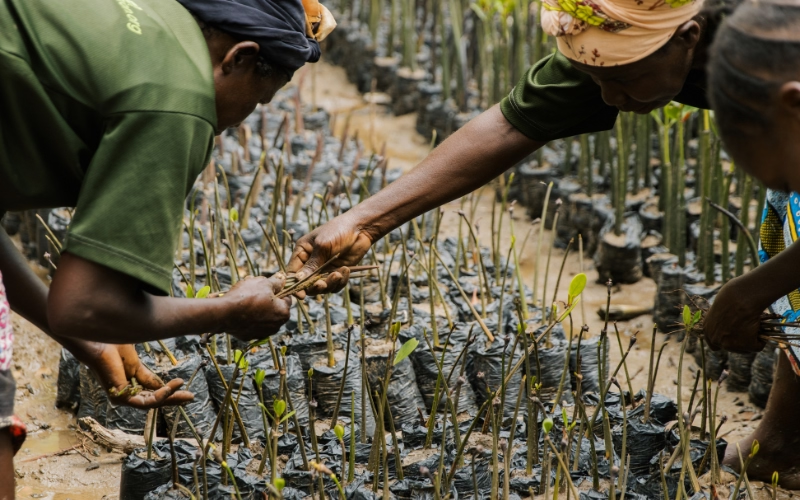
veritree’s guide on greenwashing and environmental claims explains why businesses need to move away from vague sustainability language and toward claims that are backed by clear, verifiable action.
Generic environmental language can create risk when it is vague or unsupported.
Terms like “green,” “eco-friendly,” “sustainable,” or “planet-friendly” may sound simple, but they can be difficult to defend if the claim is not specific and evidence-backed.
For verified tree planting, a stronger approach is to describe the actual activity:
“This campaign supports verified tree planting in [project location], with project progress tracked through [reporting tool].”
That gives the reader more information and gives the business a clearer evidence path.
For global brands, the EU greenwashing directive should not be reviewed only by asking, “Where is our company based?”
A more useful question is, “Can EU consumers see, access, or respond to this claim?”
That distinction matters for ecommerce sites, product pages, sustainability landing pages, social campaigns, customer impact campaigns, and brand content that may reach EU audiences. A company outside the EU may still need to review its environmental claims if those claims are being used in consumer-facing contexts that reach EU customers.
For verified tree planting claims, this means teams should review not only EU-specific campaigns, but also global sustainability pages, customer-facing dashboards, checkout messages, product claims, and campaign language that could be visible to EU consumers.
Future-facing environmental claims should be connected to measurable steps and progress tracking.
If a business makes a claim about future restoration, climate action, or sustainability progress, it should have documentation showing how the claim will be monitored, updated, and reported.
This is where impact reporting becomes essential. It gives the team a way to track whether the program is progressing and whether the language needs to be updated over time.
Claims that imply a product, purchase, or company has been neutralized by tree planting require special care.
Businesses should avoid broad claims like “this order is carbon neutral” or “your purchase offsets emissions” unless the claim is fully substantiated under applicable rules.
A more careful approach is to explain the supported action:
“This purchase supports verified restoration activity in [project location]. Project reporting includes planting activity, restoration updates, and [X amount] of estimated carbon to be sequestered over [X years], where applicable.
This keeps the claim tied to the evidence and avoids implying more than the project data supports.
Before a verified tree planting claim goes live, sustainability teams should create a claim file.
A claim file is the internal documentation package that supports the claim if it is challenged. It helps ESG, CSR, legal, compliance, and marketing teams work from the same source of truth.
Start by documenting the exact language being used.
This includes copy for websites, product pages, packaging, email campaigns, social media, paid ads, ESG reports, CSR updates, investor materials, and internal presentations.
The exact wording matters because small language changes can change the meaning of the claim.
Clarify what the claim applies to.
Does it apply to one campaign, one product line, one transaction type, one event, one customer action, or the entire business? The scope should be clear before the claim is published.
If the evidence supports a campaign, do not write a company-wide claim.
Every claim should connect to evidence.
This may include project documentation, dashboard data, reporting links, methodology notes, project updates, due diligence records, planting activity, species information, and internal approvals.
veritree’s partner reporting and marketable content can help brands make project data and impact updates more accessible for internal teams and external stakeholders.
If the evidence does not support the claim, the claim should be rewritten.
A defensible claim should also identify its limits.
For example, a verified tree planting campaign may support restoration activity, but that does not mean the product, purchase, or company is automatically sustainable, climate neutral, or net zero.
Documenting exclusions helps prevent overclaiming.
Carbon-related claims need extra review.
This gives teams a more careful way to reference carbon-related project information while acknowledging that methodology continues to evolve.
A claim file should be easy to find.
If a regulator, auditor, legal team, executive, or customer asks for proof, the sustainability team should not have to generate the evidence trail from scratch.
Store claim language, project data, reporting links, approvals, and updates in a central location.
Impact reporting should reflect the project lifecycle.
As new updates become available, the claim may need to be refreshed. Old impact numbers, outdated project statements, or unsupported claims should not remain live indefinitely.
A defensible claim file should include a review date or refresh schedule.
Defensible impact reporting should help your team answer one core question: can we support this claim with evidence?
Before publishing a tree planting claim, sustainability teams should be able to access:
This information should be available before a claim goes live. If the documentation is missing, unclear, or hard to retrieve, the claim may need to be narrowed or rewritten.
Defensible claims are specific, scoped, and supported by evidence. They avoid broad language and explain what the program actually supports.
Here are a few examples of how tree planting claims can be made stronger.
Use:
“Our campaign supports verified tree planting in [project location], with project progress tracked through [reporting tool or dashboard].”
This is stronger because it avoids making a broad company-wide claim and focuses on the specific action being supported.
Use:
“Your purchase supports verified restoration activity in [project location]. Project reporting includes planting activity, restoration updates, and [X amount] estimated carbon to be sequestered over [X years], where applicable.”
This is stronger because it avoids implying the purchase has been neutralized and keeps the claim tied to the available project data.
Use:
“This initiative funds verified tree planting as part of a restoration project in [region], with reporting on project activity, species, monitoring updates, and relevant impact indicators.”
This is stronger because it gives more context and identifies the evidence behind the claim.
Use:
“For every order during this campaign, [brand] funds verified restoration activity through veritree. Project progress is tracked through [Impact Hub or reporting link].”
This is stronger because it clarifies the timing, scope, and reporting path.
Want more examples of claim language that can stand up to scrutiny? Download the Anti-Greenwashing Directive Guide.
Impact reporting is most useful when it creates one source of truth for the teams responsible for using, approving, and defending sustainability claims.
A verified tree planting claim may start with the sustainability team, but it often appears across marketing channels, ESG reports, CSR updates, board materials, sales decks, and customer-facing campaigns. If each team uses different wording or different numbers, risk increases.
Impact reporting helps align those teams.
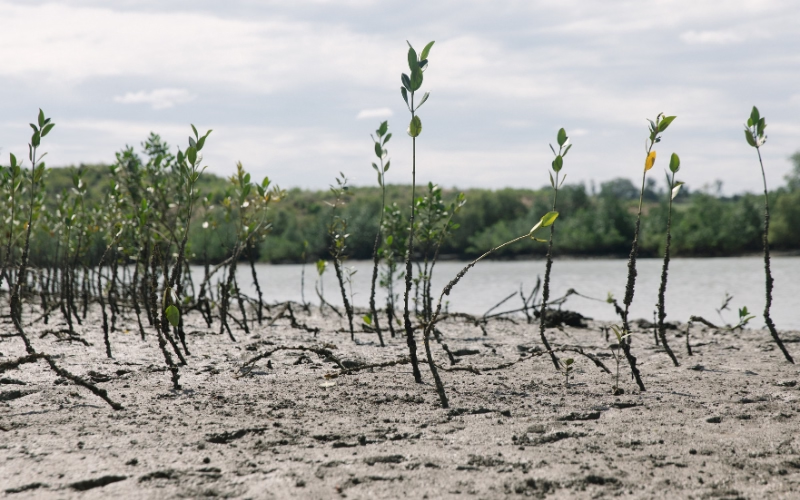
ESG and sustainability teams can use impact reporting to track project progress, prepare stakeholder updates, support annual reporting, and maintain claim documentation.
This helps the team move from general sustainability statements to specific evidence-backed reporting.
CSR teams can use impact reporting to show how sustainability programs connect to measurable restoration activity.
This is especially useful when tree planting is tied to employee engagement, customer participation, community impact, or annual corporate responsibility goals.
Legal and compliance teams need to understand claim scope and substantiation before copy goes live.
Impact reporting gives them a clearer view of what evidence exists, what language is supportable, and where a claim may need to be narrowed.
Marketing teams need approved language they can use without overclaiming.
Impact reporting helps them translate project data into clearer copy, stronger campaign pages, and more responsible sustainability messaging.
Executives and boards need to understand program status, risk exposure, and stakeholder-ready evidence.
Impact reporting gives leadership a clearer picture of what the company is supporting and whether public claims can be defended.
Many sustainability claims become risky because the language is broader than the evidence.
A company may be supporting a real project, but if the claim is unclear, overbroad, or missing documentation, it can still create problems.
Common breakdowns include:
These issues are avoidable when teams build claim files, define scope, and connect every public statement to the right evidence.
veritree helps brands support verified tree planting and restoration with the documentation, reporting tools, and partner support needed to communicate claims more responsibly.
The goal is not to make broad sustainability claims sound better. The goal is to help brands connect claims to project data, clear scope, and reporting that can support questions from stakeholders.
veritree’s team reviews planting and restoration projects before offering them to brands.
This helps businesses choose from restoration opportunities that have already gone through project due diligence before they are presented as options.
After a brand becomes a partner, veritree’s team helps choose available projects that align with the brand’s goals, audience, campaign needs, and sustainability priorities.
This helps brands select projects that fit their strategy and are easier to communicate clearly.

veritree’s platform supports project visibility, monitoring, reporting, dashboards, and stakeholder communication.
This gives teams access to the information needed to understand what project is being supported, where it is happening, and how progress is being tracked.
veritree helps brands connect claims to project data and describe restoration activity with clearer, more specific language.
This can help teams avoid vague claims and create copy that better reflects what the program actually supports.
Brands can use dashboards, reporting tools, and impact content to help stakeholders understand what the project supports and how progress is tracked.
This makes verified tree planting easier to communicate to customers, employees, investors, boards, and internal teams.
As project data evolves, veritree supports partners with updates, reporting assets, and customer success guidance.
This helps teams keep claims aligned with current project information and avoid relying on outdated impact language.
Tree planting claims need more than good intentions. They need documentation, scope, data, and a clear reporting trail.
veritree helps businesses support verified tree planting and restoration projects with project due diligence, tailored project selection, transparent impact data, and reporting tools that make claims easier to support when stakeholders ask for proof.
Build impact reporting that helps your team communicate with confidence and defend claims with evidence.
Reach Out To Explore Impact Reporting.
Impact reporting for tree planting is the process of documenting and sharing the evidence behind a tree planting or restoration claim. It can include project location, project scope, planting activity, species information, monitoring updates, verification details, impact metrics, and estimated carbon to be sequestered where applicable.
Tree planting claims need documentation because stakeholders, auditors, regulators, or internal legal teams may ask for proof. Documentation helps show what was supported, where the project happened, how progress was tracked, and what the claim actually covers.
Businesses should have project location, project scope, activity records, restoration type, species data, monitoring updates, reporting links, methodology notes, approved claim language, and any relevant limitations or exclusions.
The EU greenwashing directive increases scrutiny around environmental claims, especially vague, generic, or unsupported claims. Businesses making tree planting or restoration claims should ensure those claims are specific, scoped, evidence-backed, and reviewed before publication.
Sustainability managers can make impact claims more defensible by creating a claim file, defining claim scope, matching each claim to evidence, documenting limitations, reviewing carbon language, and keeping reporting data accessible and up to date.
veritree supports defensible impact reporting through project due diligence, tailored project selection, project data, reporting dashboards, Impact Hub visibility, scoped claim support, and ongoing customer success support.
PREV BLOG