Novel Monitoring Features to Scale Mangrove Restoration
Read Now



February 28, 2024

First off, it’s important to recognize that different tree species have different survival rates based on their adaptability to local conditions. Of course, extreme weather events such as droughts, floods, storms, and temperature fluctuations can impact a tree's likelihood of survival. However, many other factors such as as soil quality, predators, or planting methods can also influence the survivability of trees. Did you know that mortality rates are typically at their highest during the first few years after planting? This is because the trees are still establishing their root systems. Thankfully, once established, trees generally have higher survival rates.
veritree's approach to measuring survivability during the early stages of growth is refreshingly grounded, avoiding less reliable geospatial tools in favour of raw, field-derived data. How does it work? First off, this is no easy task. At every planting session, the designated Monitoring and Evaluation Lead and Site Forester visit hundreds of randomly selected plots, where they meticulously count and record dead, alive, and naturally regenerating trees. Where mortality is found, the root cause is documented to ensure a comprehensive understanding of influencing factors. In addition to survivability, tree height and diameter are measured to estimate growth rates and provide further evidence of tree health. Finally, the team takes and uploads hundreds of images and videos to chronicle and support their findings.
Survivability checks begin at the three-month mark and are repeated at six and twelve months, ensuring planting quality is evaluated early and confidence in the project is established from the start. From 12 months onwards, the sites are surveyed annually using remote sensing. This methodology, honed in collaboration between the EarthLungs team and veritree, ensures a structured process across all mangrove sites. Thanks to the diligent data collection efforts of the EarthLungs team (across hundreds and hundreds of planting sessions) this rigorous assessment promises not only a deeper understanding of mangrove survivability but also sets a precedent for meticulous environmental monitoring practices.
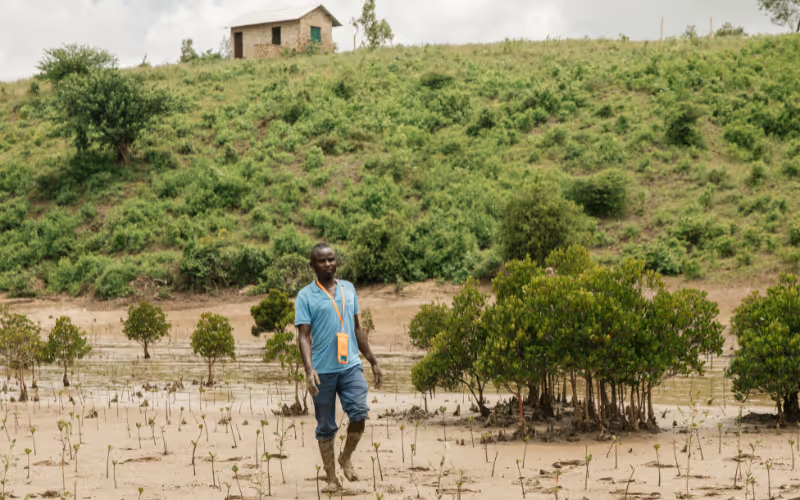
The insights obtained from these survivability checks help to inform future planning done by EarthLungs. Armed with a deeper understanding of site performance, EarthLungs can refine their planting sessions, optimize their processes, and guide future site selections. Furthermore, these insights prompt proactive measures to mitigate identified issues. For instance, observations of drying as a primary factor in propagule mortality have spurred EarthLungs to preemptively dig irrigation channels, ensuring adequate water supply and forestalling future losses. With an extensive repository of evidence, including the massive quantity of photos and videos captured monthly through the veritree’s App, EarthLungs stands poised to innovate further. The seamless integration of technology, soon to be coupled by the App's capability to streamline planting session creation and automate survivability reporting through image capture, represents a substantial leap in efficiency and precision.
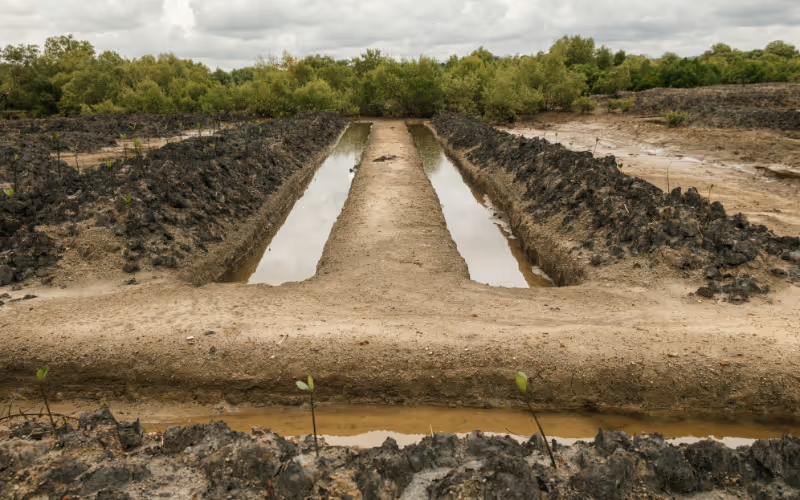
Looking ahead, the integration of veritree’s AI tools promises to further enhance data accuracy and efficiency, streamlining this arduous task of data collection and empowering field members with real-time, scalable survival checks. By leveraging these insights and innovative tools, along with their own learned practices and technical knowledge, EarthLungs is amplifying our collective environmental impact. Together, we're setting a precedent for adaptive and data-driven restoration efforts on a global scale.
PREV BLOG